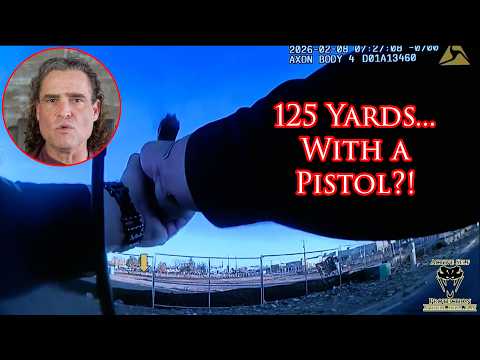
Armed Home Invader Meets His Match Against Phoenix PD

Published on January 30, 2025
Duration: 21:54

This video analyzes a critical incident where Phoenix PD officers responded to a home invasion. It details the suspect's flight, crash, and armed confrontation, highlighting officer tactics, the use of force justification under Graham v. Connor, and the importance of physiological control during high-stress events. The analysis emphasizes independent decision-making by officers and the effective use of weapon-mounted lights.

Quick Summary

Phoenix PD officers responded to a home invasion, engaging an armed suspect after a pursuit and crash. The incident highlights the importance of officer restraint, independent decision-making, and adherence to the Graham v. Connor standard for use of force. Analysis covers tactical light usage and physiological control during high-stress events.

Chapters

  1. 00:00Introduction and Incident Context
  2. 00:34Sponsor Message: Mantis
  3. 01:00Incident Overview
  4. 01:40Badge Cam Footage Analysis
  5. 03:20Evidence and Physiological Control
  6. 05:17Tactical Use of Weapon-Mounted Lights
  7. 07:05Legal Standards and Force Decisions
  8. 13:39Independent Decision Making
  9. 18:40Final Shot Justification

Frequently Asked Questions

What legal standard governs the use of force by police in the US?

The use of force by law enforcement in the US is governed by the objective reasonableness standard established in Graham v. Connor. This standard requires evaluating an officer's actions based on what a reasonable officer would do in similar circumstances, considering the totality of the facts known at the time.

How did officers maintain situational awareness during the Phoenix PD incident?

Officers utilized weapon-mounted lights to scan their surroundings and maintain awareness of potential threats without directly flagging their partners. This tactical approach ensured safety and improved their ability to assess the evolving situation.

What is the significance of independent decision-making in critical incidents?

Independent decision-making means each officer assesses the threat and decides whether to use force based on their unique perspective. This prevents 'contagious fire' and ensures that force is only applied when individually justified, aligning with legal standards.

What role does physiological control play in high-stress encounters?

Physiological control, including managing heart rate and engaging the 'thinking brain,' is crucial for effective performance under extreme stress. It allows officers to make rational decisions and execute tactics accurately, rather than reacting solely on instinct.

Related News

All News →

More Tactical & Gear Videos You Might Like

More from Active Self Protection

View all →