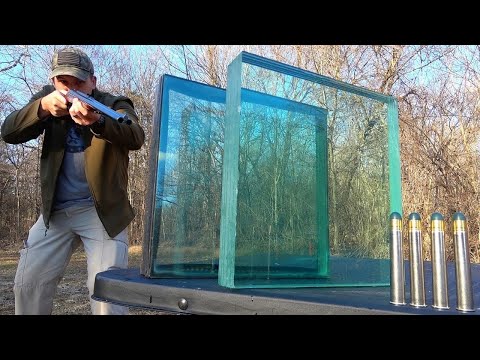
Bullet Proof Glass .22lr .380 9mm .40 S&W .45acp UL 752 Level 1 Polyurethane Lexan

Published on February 28, 2021
Duration: 13:54

This video tests the ballistic resistance of UL 752 Level 1 rated bulletproof glass, specifically Lexan or polycarbonate, against various handgun calibers. The instructor demonstrates how different calibers (.22LR, .380 ACP, 9mm, .40 S&W, .45 ACP) interact with the material, noting penetration, deformation, and ricochet. The test highlights the material's effectiveness against common pistol rounds while also showing its limitations, particularly with larger calibers and angled impacts.

Quick Summary

UL 752 Level 1 rated bulletproof glass, often made of Lexan or polycarbonate, is designed to stop common handgun rounds. This test demonstrates its effectiveness against calibers like .22LR, .380 ACP, 9mm, .40 S&W, and .45 ACP, though limitations exist with larger calibers and angled impacts.

Chapters

  1. 00:00Introduction to Bulletproof Glass Test
  2. 00:32Material Identification: Lexan/Polycarbonate
  3. 00:51Testing Plan: Handgun Calibers
  4. 01:04Calibers Tested: .45 ACP, .40 S&W, 9mm, .380, .22LR
  5. 01:13Ammunition Type: Full Metal Jacket (FMJ)
  6. 01:31Test Sequence: Smallest to Largest Caliber
  7. 01:39Safety Warning: Do Not Try This At Home
  8. 01:44.45 ACP Ricochet Observation
  9. 02:17Test Start: .22LR Shots
  10. 03:44Post-.22LR Impact Analysis
  11. 04:04Post-.380 Impact Analysis
  12. 05:02Glass Structure: Actual Glass & Plexiglass Layers
  13. 05:48Test Start: 9mm Luger Shots
  14. 06:50Post-9mm Impact Analysis: Bubbling Layer
  15. 07:34Test Start: .40 S&W Shots
  16. 08:30Post-.40 S&W Impact Analysis
  17. 08:52Test Start: .45 ACP Shots
  18. 09:17Comparison to Previous .45 ACP Tests
  19. 09:30Thin First Layer's Containment Effect
  20. 09:42Thicker Material vs. Current Material Rating
  21. 10:06.45 ACP Ammunition Details (230gr RN)
  22. 10:52Post-.45 ACP Impact Analysis
  23. 11:01Backside View: No Penetration on .45 ACP
  24. 11:11Material Separation and Shrapnel
  25. 11:22Backside Shattering Effect
  26. 12:08Recovered .45 ACP Bullets
  27. 12:12Reason for Penetration (Pre-fractured Area)
  28. 13:06Overall Material Durability and Round Count
  29. 13:24Conclusion and Thanks
  30. 13:28Reference to Previous Rifle Test Video

Frequently Asked Questions

What is UL 752 Level 1 bulletproof glass designed to stop?

UL 752 Level 1 rated bulletproof glass, often made of Lexan or polycarbonate, is designed to stop common handgun rounds. This test demonstrates its effectiveness against calibers like .22LR, .380 ACP, 9mm, .40 S&W, and .45 ACP, though limitations exist with larger calibers and angled impacts.

How did different handgun calibers perform against the bulletproof glass?

In the test, .22LR, .380 ACP, and 9mm rounds generally penetrated the glass. .40 S&W caused significant fragmentation, while .45 ACP tended to bounce off, especially on angled surfaces. One .45 ACP round penetrated a pre-damaged section.

What are the key characteristics of UL 752 Level 1 glass tested?

The tested UL 752 Level 1 glass appears to be a multi-layered material, possibly polycarbonate or Lexan, featuring a thin outer layer that aids in containing projectiles. While it resists handgun rounds, it can crack and delaminate with repeated impacts or larger calibers.

What safety precautions are necessary when testing ballistic materials?

Testing ballistic materials is extremely dangerous and should not be attempted at home. Risks include severe injury from ricochets, material fragmentation, and unpredictable projectile behavior. Professional testing requires controlled environments and extensive safety protocols.

Related News

All News →

More Tactical & Gear Videos You Might Like

More from Buckeye Ballistics

View all →