This guide details the testing of a prototype Brazilian Police Pistol Shield, focusing on its construction, mounting, and ballistic performance against various handgun calibers. The shield, made of 1.25-inch thick Lexan/polycarbonate, mounts to railed handguns and allows slide operation. While effective against common handgun rounds, it structurally fails against larger calibers like .44 Magnum, though it still contains projectiles. The testing highlights potential recoil reduction benefits.
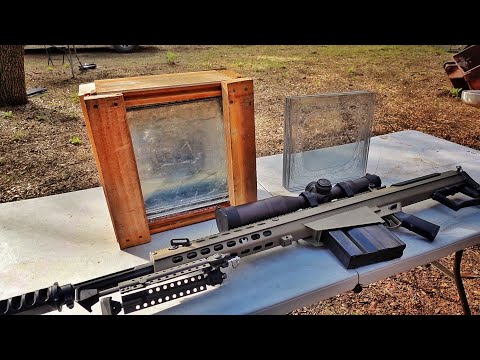
This video documents a dangerous experiment where individuals from Top Guns test the ballistic resistance of approximately 1-inch thick bulletproof glass against various calibers, including 9mm, 5.56x45mm, .50 AE, and .50 BMG. The test is repeated with reinforced glass up to two inches thick. The results highlight the significant differences in penetration capabilities between calibers and the surprising resilience and destructive potential of certain rounds against armored materials. The presenters emphasize that this is not a safe or recommended activity.
This video tests the ballistic resistance of UL 752 Level 1 rated bulletproof glass, specifically Lexan or polycarbonate, against various handgun calibers. The instructor demonstrates how different calibers (.22LR, .380 ACP, 9mm, .40 S&W, .45 ACP) interact with the material, noting penetration, deformation, and ricochet. The test highlights the material's effectiveness against common pistol rounds while also showing its limitations, particularly with larger calibers and angled impacts.
This video details the construction and testing of homemade ballistic glass panels designed to stop various rifle calibers, including the formidable 50 BMG. The creator, Matt, explains the layered approach using Lexan and glass, theorizing that harder glass shatters bullets and Lexan catches them. While initial tests show promise against smaller calibers, the 50 BMG ultimately penetrates the largest constructed panel, damaging a vehicle.
This video features a .308 rifle being used to shoot bullet-resistant plexiglass, specifically described as Lexan and referred to as "bullet proof glass." The ammunition used is specified as SP (Soft Point) and FMJ (Full Metal Jacket). The description also lists various gear used by the creator, including steel targets, cameras, audio equipment, safety gear, and reloading tools, indicating a focus on firearms testing and demonstration.
This video tests the ballistic resistance of UL752 BR1250 bullet-resistant plexiglass against various popular calibers. The firearms used include a Rossi .22LR, Keltec Sub 2000 in 9mm, Ruger Mini 14 in 5.56mm, and a Century Arms CV39V2 AK47 in 7.62x39mm. The test aims to demonstrate the effectiveness of the "bullet proof glass" against different rounds, providing a visual comparison of penetration and impact.
This guide outlines an experimental test comparing the ballistic resistance of a Lexan sheet and multi-layered bulletproof glass against 9mm FMJ ammunition. The test, conducted by Edwin Sarkissian, demonstrates that both materials offer significant resistance, requiring multiple concentrated hits to achieve penetration. The findings highlight that while materials may be "bulletproof," they have defined limits of resistance.
This video offers a unique look at a "Hi Point Suit" created for testing the durability of a Hi-Point pistol, specifically for an attempted explosion. The description highlights its construction from readily available materials like a trash can, pistol belt, Lexan, and nuts/bolts, with a humorous addition of a Surefire mount. The creator emphasizes this is for documentary, educational, and entertainment purposes, conducted safely on a firing range by professionals. A strong disclaimer is provided regarding imitation and liability.
You've reached the end! 8 videos loaded.
Gun Laws by State
Read firearms regulations for all 50 states + D.C.
Find Gun Dealers
Search licensed FFL dealers near you.