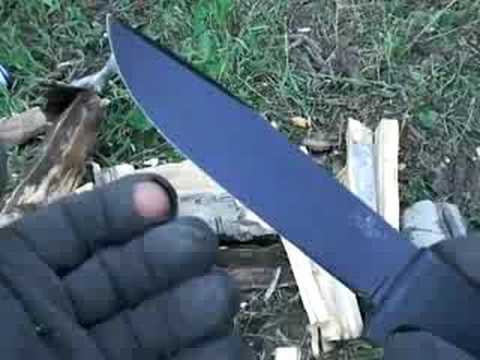
"High Skies" by Nutnfancy, Pt 3

Published on November 18, 2009
Duration: 42:07

This video demonstrates and compares the batoning capabilities of several survival knives, including the Fallkniven A1, Kershaw Outcast, SOG SEAL Pup Elite, Cold Steel SRK, and Cold Steel Recon Scout. The instructors emphasize the importance of batoning for processing wood for fire and shelter in survival situations, discussing the strengths and weaknesses of different knife steels like D2, stainless steel, and carbon steel in this context. They highlight how blade shape, thickness, and steel type affect performance when splitting wood, especially around knots.


Quick Summary

Batoning is a key survival skill for processing wood using a knife and baton. Carbon steel knives, like the Cold Steel Recon Scout, are often preferred for their toughness and field-sharpening ease, while stainless steels like the Fallkniven A1 offer rust resistance. Blade geometry and steel type significantly impact performance, especially when encountering knots or extreme temperatures.

Chapters

  1. 01:26Introduction to Survival Knives and Gear
  2. 02:11Preparing to Split Wood with Fallkniven A1
  3. 03:06Selecting a Baton for Wood Splitting
  4. 05:02Batoning Technique and Blade Care
  5. 07:03Carbon Steel vs. Stainless Steel for Batoning
  6. 08:01Fallkniven A1 Batoning Performance Review
  7. 12:55Kershaw Outcast D2 Steel Batoning Test
  8. 17:12Kershaw Outcast Chopping Performance
  9. 20:05Kershaw Outcast Splitting Difficulties
  10. 28:07RD9 Knife Batoning and Steel Chipping
  11. 32:46SOG SEAL Pup Elite and LBE Knife Discussion
  12. 34:12Comparing LBE Survival Knives: A1, SRK, SEAL Pup Elite
  13. 36:09Cold Steel Recon Scout Batoning and Heft
  14. 37:40Cold Steel Recon Scout vs. Trail Master
  15. 39:15Carbon Steel Advantages: Unchipped and Easy Sharpening
  16. 41:11Fire Building and Conclusion

Frequently Asked Questions

What is batoning and why is it important for survival?

Batoning is a technique used with a survival knife to split wood for fire or shelter. It involves striking the spine of the knife with a baton to drive the blade into the wood. This is crucial in survival situations where processing wood efficiently is necessary for warmth and protection.

Which knife steels are best for batoning wood?

Carbon steels like 1095 are generally preferred for batoning due to their toughness and ease of field sharpening. While stainless steels like those in the Fallkniven A1 can perform well, steels like D2 may be prone to chipping in extreme conditions or when hitting hard knots during batoning.

How does blade geometry affect batoning performance?

A blade with a good wedge shape and sufficient thickness is ideal for batoning, as it helps to split the wood more effectively. Knives with thinner blades or less pronounced wedges may struggle more, especially with dense or knotted wood.

What are the pros and cons of stainless steel vs. carbon steel for survival knives?

Carbon steel is tougher, more resilient, and easier to sharpen in the field, making it excellent for demanding tasks like batoning. Stainless steel offers superior rust resistance and less maintenance but can be harder to sharpen and may be more brittle in certain alloys or extreme cold.

More Tactical & Gear Videos You Might Like

More from nutnfancy

View all →