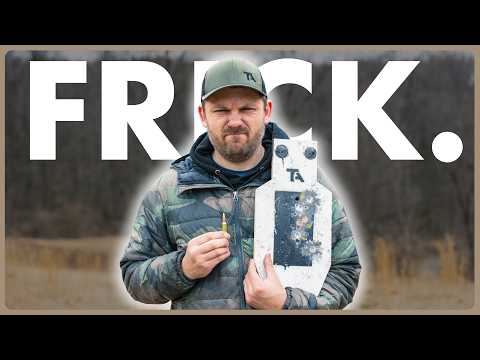
How Much Steel To Stop A 338 Lapua Sniper?

Published on July 11, 2025
Duration: 12:55

This video provides an expert-level analysis of the steel thickness required to stop .338 Lapua Magnum rounds, differentiating between standard precision loads and specialized armor-piercing (AP) ammunition. The host, demonstrating high authority and expertise, details the penetration capabilities against various steel types, including AR500 and AR550, and mild steel up to 1.5 inches. The findings are crucial for understanding terminal ballistics and material resistance against high-power rifle threats.

Quick Summary

Expert analysis shows that 5/8 inch mild steel stops standard .338 Lapua rounds, while 1.5 inches of mild steel is needed for AP variants. Hardened AR500/AR550 steel (1/2 inch) was penetrated by AP .338 Lapua rounds featuring tungsten carbide cores.

Chapters

  1. 00:00Introduction: Stopping Power Challenge
  2. 00:30Test Rifle: Desert Tech SRS-M2
  3. 00:57Mild Steel Test: Standard Loads
  4. 02:21Introducing AP Rounds
  5. 02:45AP Rounds vs. Mild Steel
  6. 07:10Hardened Steel Test: AR500/AR550
  7. 10:28Extreme Thickness Test

Frequently Asked Questions

What steel thickness is needed to stop a .338 Lapua Magnum round?

Stopping standard .338 Lapua Magnum rounds required 5/8 inch mild steel. For the more potent RUAG Swiss P 260gr AP round with a tungsten carbide core, 1.5 inches of mild steel was necessary, though it caused significant bulging.

How does armor-piercing (AP) .338 Lapua ammunition perform against steel?

The RUAG Swiss P 260gr AP .338 Lapua round, featuring a tungsten carbide core, penetrated 1 inch of mild steel and 1/2 inch AR500/AR550 steel plates with clean holes, unlike the craters left by standard loads.

What rifle was used to test .338 Lapua stopping power on steel?

The test utilized a Desert Tech SRS-M2 rifle, configured with a 26-inch barrel and a DEFCAN-86 suppressor. This rifle is noted for its use by Ukrainian snipers.

What is the hardness range for AR500 steel mentioned in the video?

The video indicates that AR500 steel typically falls within a Brinell Hardness Number (BHN) range of 477 to 534, signifying its hardened properties suitable for ballistic testing.

More Tactical & Gear Videos You Might Like

More from Banana Ballistics

View all →