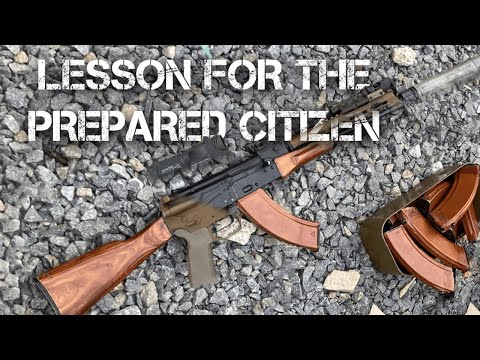
Intro to Advanced Comms for the Prepared Citizen

Published on June 23, 2023
Duration: 18:36

This video from Brass Facts provides an expert-level overview of advanced radio communications for prepared citizens, moving beyond basic use to tactical implementation. It covers identifying threats (OPFOR), understanding civilian SIGINT realities, and detailed strategies for close-range, medium-range, and infield-to-base communications. The instruction emphasizes the importance of encryption, comparing digital vs. analog signals, and leveraging repeaters for extended range, all delivered with a pragmatic and informative tone.


Quick Summary

Brass Facts provides expert instruction on advanced radio communications for prepared citizens, covering OPFOR identification, civilian SIGINT realities, and tactical communication strategies for various ranges. The video details encryption benefits, compares digital vs. analog signals, and explains the use of repeaters for extended range, emphasizing pragmatic preparedness.

Chapters

  1. 00:00Introduction to Advanced Comms
  2. 01:42OPFOR Considerations
  3. 04:24Civilian SIGINT Reality
  4. 06:21Close Range Tactical Comms
  5. 07:46Medium Range Communication
  6. 09:16Long Range Communication
  7. 11:13Encryption and Security
  8. 13:29Digital vs. Analog Signals
  9. 14:57Repeaters and Range Extension

Frequently Asked Questions

What are the key considerations for identifying potential threats (OPFOR) in preparedness scenarios?

OPFOR is categorized into 'Peer' threats, which are other civilians with similar technology, and 'Overmatched' threats, such as military or government forces possessing advanced ISR and SIGINT capabilities. Understanding this distinction is crucial for communication planning.

How does the video address the reality of civilian Signal Intelligence (SIGINT) capabilities?

The video emphasizes a reality check on civilian SIGINT, noting that while advanced threats exist, overestimating the average prepper's ability to triangulate signals can lead to unnecessary paranoia. It encourages focusing on practical, secure communication methods.

What is the difference between close-range and medium-range tactical communication?

Close-range communication (under 150m) uses short, low-information messages for immediate coordination during fights. Medium-range communication (within 500m) involves higher information density and more time-sensitive messages, where interception risks increase.

Why is encryption important for long-range communication in preparedness?

Encryption is nearly mandatory for infield-to-base or long-range communications because this information is often critical and sensitive. Encrypting messages prevents alerting the Opposing Force (OPFOR) to your presence, location, or intentions.

More Tactical & Gear Videos You Might Like

More from Brass Facts

View all →