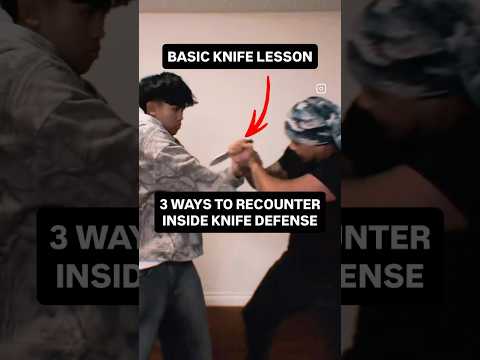
Knife vs Knife...But He Keeps Fighting!

This video demonstrates a theoretical self-defense technique against a knife attack, focusing on evasion, closing distance, and controlling the weapon-bearing limb. The instructor emphasizes corrupting the attacker's arm structure to gain control and create options, such as applying a hammer lock or inflicting further damage if necessary. The concepts are presented as solid principles for managing a close-quarters knife threat.


Quick Summary

In knife defense, the core strategy is to evade the initial attack, quickly close the distance, and gain control of the weapon-bearing limb. Techniques include corrupting the arm's structure, transitioning to wrist control, and applying a hammer lock to neutralize the threat and create options.

Chapters

  1. 00:03Introduction: Direct Attack & Evasion
  2. 00:05Initial Evasion and Closing Distance
  3. 00:10Controlling the Attacker's Struggle
  4. 00:15Estimating Attacker's Fight Time
  5. 00:23Hollowing Out and Transition to Wrist Control
  6. 00:29Corrupting Arm Structure
  7. 00:37Applying a Hammer Lock
  8. 00:45Cutting the Hose from the Other Side
  9. 00:48Dodge One, Enter Two, Cut Straight
  10. 00:51Holding and Control Techniques
  11. 00:55Hammer Lock Options and Takedown
  12. 01:02Summary of Concepts: Evasion, Distance, Control
  13. 01:13Using Frame and Barrier for Defense
  14. 01:22Influencing Arm Structure and Hammer Lock
  15. 01:25Options: Wait it Out or Inflict Damage

Frequently Asked Questions

What is the primary defensive strategy against a direct knife attack?

The primary strategy involves evading the initial strike, immediately closing the distance to the attacker, and then focusing on controlling the weapon-bearing limb to neutralize the threat.

How can one control an attacker's arm during a knife fight?

Control is achieved by 'corrupting the structure of his arm,' which involves applying pressure to manipulate the limb, transitioning to wrist control, and potentially applying a hammer lock.

What are the options after gaining control of the weapon-bearing limb?

After gaining control, options include waiting out the attacker's resistance, taking them to the ground, or continuing to inflict damage as necessary to ensure safety.

What role does evasion play in knife defense?

Evasion is critical for the initial survival, allowing you to get out of the way of the first strike. It's the first step before closing distance and engaging the attacker's weapon arm.

More Tactical & Gear Videos You Might Like

More from Funker Tactical - Fight Training Videos

View all →