

Funker Tactical - Fight Training Videos
Channel: @funkertactical
Videos from Funker Tactical - Fight Training Videos

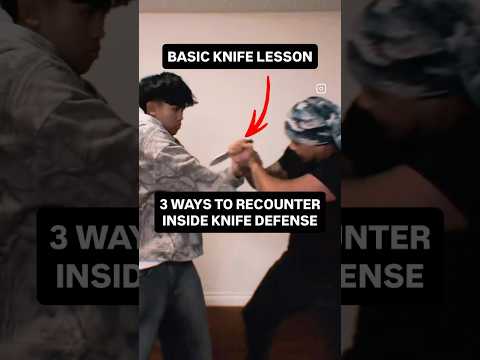
This video demonstrates three counter-techniques for when a backhand thrust knife defense becomes jammed. The instructor, with clear authority, explains how to perform an inside check and attack the grip's weak point, or transition to an outside line attack by manipulating the blade. For larger individuals, a direct power collapse of the weapon is also shown. The emphasis is on practical application and training.

This video explains how to integrate knife switching mechanics (forward and reverse grips) into existing Filipino Martial Arts flow drills like Sabayan. It emphasizes using these drills as an intermediary step before pressure testing, allowing for mindful repetition, speed infusion to find failure points, and the optional layering of techniques like disarms. The instruction is based on teachings by Tuhan John Franken.

This video demonstrates advanced knife defense techniques specifically for extreme close quarters. It emphasizes a series of thrusting and looping motions, numbered 5, 8, and 9, to be applied with pressure. The instruction highlights using the flow of movement to learn and pressure test these techniques, clearing high and low lines, and ultimately turning the tide to terminate the threat.

This video introduces a drill designed to improve reaction time to knife threats by leveraging the brain's rapid information processing capabilities. The exercise involves closing eyes, opening them upon a cue, and immediately reacting to a statically placed knife by 'slapping' it or the attacker's arm, emphasizing instinctual responses over conscious thought.
This video explains intuition as subconscious pattern recognition, crucial for self-defense. It details pre-attack indicators, including environmental scanning, grooming, indexing for potential threats like concealed weapons, and body blading. The instructor emphasizes making probability judgments in dynamic situations to decide between evasion or pre-emptive action.

This video demonstrates the 589 drill, a close-range combat training exercise focused on sequential knife thrusts and defensive counters. The drill involves a low-line thrust (center mass abdomen), a reverse eight thrust (neck), and a high lateral nine thrust (subclavian), followed by defensive maneuvers like cross-side bisecting lines and elbow checks, and counter-trapping techniques. The drill emphasizes fluid transitions and eventually encourages deviating from the strict sequence for more dynamic application.

This video demonstrates a critical self-defense technique for when an opponent successfully blocks a knife attack. The instructor, utilizing a reverse grip, explains how to transition from an initial attack to an elbow roll on the inside line. This maneuver inverts the knife, creating an opportunity for an effective inside line cut and allowing for disengagement. The emphasis is on maintaining control without over-reliance and escaping the dangerous situation.

This video demonstrates a theoretical self-defense technique against a knife attack, focusing on evasion, closing distance, and controlling the weapon-bearing limb. The instructor emphasizes corrupting the attacker's arm structure to gain control and create options, such as applying a hammer lock or inflicting further damage if necessary. The concepts are presented as solid principles for managing a close-quarters knife threat.

This video demonstrates five tactical counters to common knife attacks, emphasizing evasion, rapid defense, and decisive counter-offensives. The techniques cover various scenarios, including common attack sequences, the 'caveman' attack, and close-distance engagements. The instruction highlights the importance of controlling the weapon-bearing limb, creating openings through movement like elbow rolls, and transitioning to control or further offensive actions.

This video demonstrates a theoretical knife vs. knife combat technique for resolving close-range stalemates. It outlines a strategy involving circling, direct cuts, pinning an opponent's arm, and creating an exit, emphasizing aggressive forward pressure and continuous engagement even when sustaining damage. The technique is presented as reverse-engineered from sparring.

This video emphasizes the critical importance of rapid threat assessment and decision-making in self-defense scenarios. It highlights that in a life-threatening situation, particularly involving a weapon like a knife, mistakes are unforgiving. The content stresses the need to recognize pre-attack indicators and understand potential trajectories, while acknowledging the infinite variables that influence outcomes, such as environmental conditions and one's emotional state. Effective self-defense requires making sound probability judgments under stress.