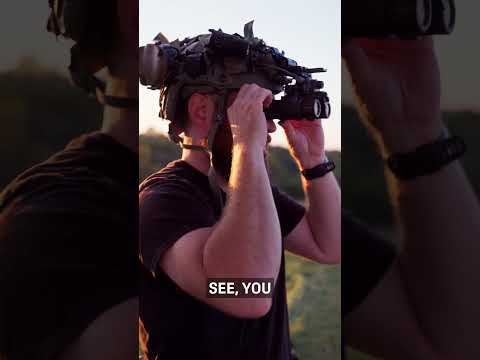
My Current Night Vison Setup (No Carrots Allowed)

Published on October 30, 2022
Duration: 14:06

This guide details a comprehensive night vision setup, focusing on helmet configuration and firearm integration. The host, a former law enforcement officer, shares his subjective preferences, highlighting a Nocturn Industries dual tube NVG with Photonis Echo 4G White Phosphor tubes, mounted on a Team Wendy helmet with a Wilcox G24. Firearm examples include a KP-9 and Mk18, emphasizing the use of IR illuminators for passive aiming. The setup prioritizes lightweight design and personal preference.

Quick Summary

A professional night vision setup prioritizes dual tube devices like Nocturn Industries' with Photonis Echo 4G White Phosphor tubes for superior depth perception and image clarity. This is integrated onto a Team Wendy helmet using a Wilcox G24 mount, paired with Comtac hearing protection. Firearm integration includes IR illuminators for passive aiming.

Chapters

  1. 00:00Introduction to Night Vision
  2. 00:50Setup Philosophy & Personal Preference
  3. 03:51Law Enforcement Background & PVS-14 Experience
  4. 04:34Nocturn Industries Partnership
  5. 06:35NVG Housing and White Phosphor Tubes
  6. 07:16Helmet Configuration: Team Wendy, Wilcox G24, Comtac
  7. 08:23Firearm Integration: KP-9, Mk18, CAR-15 with IR
  8. 11:56Technical Specs: Photonis Echo 4G & Warranty

Frequently Asked Questions

What are the key components of a professional night vision setup?

A professional night vision setup typically includes a high-quality dual tube night vision device (like Nocturn Industries), a robust helmet (e.g., Team Wendy), a reliable helmet mount (e.g., Wilcox G24), and integrated hearing protection (e.g., Comtac). Firearm integration involves IR illuminators and compatible optics.

What is the advantage of White Phosphor night vision tubes?

White Phosphor tubes are favored for their ability to render images in grayscale, which many users find offers better contrast and detail recognition compared to traditional green phosphor tubes, making target identification and environmental assessment more intuitive.

How does a dual tube night vision system compare to a monocular?

Dual tube night vision systems provide true stereoscopic vision, offering superior depth perception and a more natural viewing experience compared to monocular systems like the PVS-14. This enhanced depth perception is crucial for navigation and operating in complex environments.

What is passive aiming with night vision?

Passive aiming involves using an infrared (IR) laser or illuminator attached to a firearm, which is only visible through night vision devices. This allows for aiming without emitting visible light, maintaining the user's concealment and tactical advantage.

More from Administrative Results

View all →