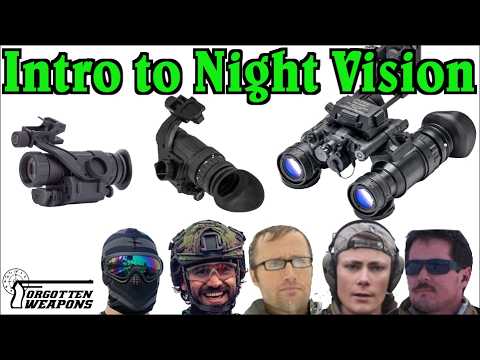
This Q&A session with night vision experts provides guidance for beginners looking to enter the world of night vision. Key recommendations include prioritizing analog PVS14 units for their value and performance, avoiding digital night vision for serious use, and understanding the importance of good glass quality over high FOM. The discussion also covers entry-level budget options, DIY setups, and practical considerations for shooting and gear integration.
This video explains the high cost of a specific night vision and thermal imaging setup. The presenter details how individual components, such as the Armasite Sidekick digital thermal unit with a 640 sensor and the Haven bridge, contribute to a total package price of around $8,000. The combination aims to provide superior visibility in darkness by overlaying thermal signatures onto night vision.
This video discusses the advantages of passive aiming with night vision devices, particularly when using a riser mount for firearms. It highlights how proper NVG brightness adjustment and natural eye-to-target acquisition allow for quick and effective shot placement without active aiming. The technique is also applied to pistol presentations for rapid engagement.
This video details an expensive tactical gear setup featuring a combination of digital thermal and night vision devices. The presenter explains that the high cost is primarily due to specialized components like the Armicite Sidekick digital thermal unit and the Raven Bridge, which are integrated onto a non-ballistic bump helmet. The setup aims to provide enhanced visibility in darkness by layering thermal detection over traditional night vision, allowing for the identification of camouflaged targets.
This guide details the setup of a Ballistic Armor Co. Bastion tactical helmet, focusing on integrating night vision, electronic hearing protection, and accessories. The presenter emphasizes comfort, American manufacturing, and Level IIIA ballistic protection. Key components include a PVS14 with a Wilcox G24 mount, modified Sordin Supreme Pro X EarPro attached via ARC rails, an Obscure counterweight system, and a Streamlight Sidewinder illuminator.
This video discusses the common practice of mounting both thermal and night vision devices on a single helmet, emphasizing that they are not meant to be worn simultaneously but rather to provide quick access to either option. The speaker, drawing from military experience, highlights the importance of comfortable, helmet-borne solutions for extended observation periods, particularly for civilian hunting use cases involving significant thermal scanning.
This video advocates starting personal night vision with white phosphor technology due to its easier integration with lasers, red dots, and passive shooting capabilities. The instructor suggests that mastering navigation and target acquisition with white phosphor first creates a solid foundation before introducing more complex thermal optics. This approach simplifies the learning curve for operating in low-light environments.
This video explores potential upgrades and additions for a "Bastion" platform to enhance its night vision (NVG) setup. The creator is soliciting suggestions from the audience on what accessories or modifications would improve the NVG experience with this particular firearm. The focus is on enhancing the capabilities of the firearm for low-light operations, implying discussions around night vision equipment and its integration.
This guide details how to assemble a budget night vision loadout, as demonstrated by Lucas Botkin of T.REX ARMS. It focuses on using used components sourced from eBay, including a blemished PVS-14, a modified snowboard helmet, and budget accessories like the Sightmark LoPro Combo. The process involves DIY modifications for mounting hardware and hearing protection, along with practical tips for counterweighting and stabilization. Botkin emphasizes that while functional for training, this setup prioritizes cost-effectiveness over the durability and ergonomics of high-end gear.
This video details essential gear considerations for night vision training, covering rifle, pistol, and helmet setups. It emphasizes the importance of balanced helmet configurations, appropriate laser and illumination devices, and reliable night vision units like RNVG Alphas. The presenter also highlights crucial supporting equipment such as extra batteries, maintenance tools, and personal protective gear for effective and safe night operations.
This video explores the advantages of combining thermal imaging with traditional night vision (NVG) for enhanced target identification. While NVG offers clear detail, thermal excels at detecting heat signatures, making it difficult for targets to remain hidden. The presenter demonstrates how pairing a thermal imager like the Armasight Sidekick with an NVG like the PVS-14, bridged together, allows for a dual-spectrum approach. This combination enables users to first detect potential targets via heat and then confirm their identity with NVG, crucial for scenarios like hunting or tactical operations where positive identification is paramount.
Braxton, a former paratrooper and DARC instructor, provides an in-depth breakdown of his personal tactical kit. He details his helmet setup with advanced NVGs and accessories, his primary Geissele URGI rifle with specific optics and laser, and a modified Remington Tac-14 breaching shotgun. The presentation covers his Spiritus Systems plate carrier, armor, and various pouches and retention methods, emphasizing practical application and high-quality gear selection.
Gun Laws by State
Read firearms regulations for all 50 states + D.C.
Find Gun Dealers
Search licensed FFL dealers near you.