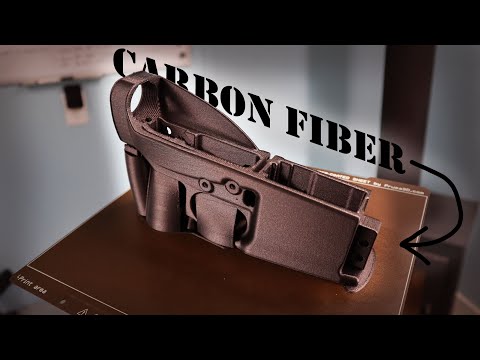
My Thoughts On The Polymaker PA12 CF Nylon

Published on November 30, 2022
Duration: 8:55

This video details the testing of Polymaker PA12 CF Nylon filament for 3D printing functional parts, including AR-15 components. It covers tensile and impact testing of dry and wet, annealed and unannealed samples, highlighting the material's low water absorption, good stiffness retention, and smooth surface finish. Concerns are raised regarding heat deflection temperature and potential creep.

Quick Summary

Polymaker PA12 CF Nylon offers excellent low water absorption and a smooth surface finish due to its under 10% carbon fiber content. It maintains high stiffness even when wet, with dry samples exceeding 15,000 PSI tensile strength. However, potential concerns include early heat deflection around 45°C and possible creep at elevated temperatures.

Chapters

  1. 00:00Introduction to Polymaker PA12 CF Nylon
  2. 00:10AR-15 Upper and Lower Prints
  3. 00:15Testing Methodology: Tensile & Impact
  4. 00:30Printing Settings on Prusa i3 MK3
  5. 00:48Annealing Process and Creep Concerns
  6. 01:04Hydroscopic Properties of PA12 vs. Other Nylons
  7. 01:36Low Fiber Content Benefits
  8. 02:07Tensile Testing Setup and Sample Groups
  9. 02:24Annealing Process Details
  10. 03:04Moisture Absorption Method
  11. 03:36Benchmark: Polymaker PLA Pro
  12. 04:08Tensile Test Results: No Necks, Little Yield
  13. 04:14Ultimate Tensile Strength Chart
  14. 05:02Young's Modulus (Stiffness) Results
  15. 05:30Impact Resistance Testing
  16. 06:10Areas of Concern: Heat Resistance
  17. 06:47Heat Deflection Temperature Curves
  18. 07:11Potential Problem: Creep
  19. 07:46Alternatives: Higher Fiber Content Nylons
  20. 08:28Cost and Future Price Trends
  21. 08:46Conclusion: PA12 CF Potential

Frequently Asked Questions

What are the key advantages of Polymaker PA12 CF Nylon for 3D printing?

Polymaker PA12 CF Nylon offers excellent low water absorption, maintaining stiffness in humid conditions. Its lower carbon fiber content results in a smooth surface finish, making it suitable for parts like grips and handguards, unlike rougher, high-fiber content nylons.

How does Polymaker PA12 CF Nylon perform in tensile and impact tests?

Dry PA12 CF samples exceeded 15,000 PSI in tensile strength, with wet samples still over 12,000 PSI. Impact resistance decreased slightly after absorbing water, a different behavior than some other nylons.

What are the main concerns with using Polymaker PA12 CF Nylon for functional parts?

The primary concerns are heat resistance, as it begins to deflect around 45°C, and potential creep at elevated temperatures. While its heat deflection temperature is 105°C, its early deflection warrants caution for high-heat applications.

Does annealing affect the properties of Polymaker PA12 CF Nylon?

Annealing Polymaker PA12 CF Nylon had minimal impact on its tensile strength and stiffness, unlike other nylons where annealing typically enhances these properties. This suggests annealing may not be as critical for PA12 CF.

More Tactical & Gear Videos You Might Like

More from Hoffman Tactical

View all →