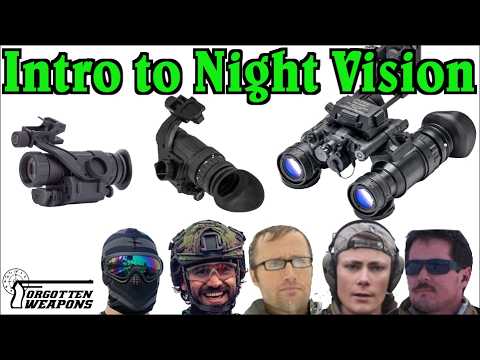
Night Vision For Beginners

Published on December 31, 2023
Duration: 26:37

This video provides a beginner's overview of night vision technology, emphasizing the importance of understanding use cases, differentiating between digital and traditional phosphor systems, and recognizing the significant cost involved. The presenters highlight the necessity of professional training, such as courses offered by Jawless Hog Tactical, to learn proper gear setup, weapon manipulation, and effective use of IR lasers and illuminators in low-light conditions. They stress that proficiency with night vision requires substantial time, practice, and a deep understanding of one's equipment.

Quick Summary

Night vision for beginners involves understanding the difference between digital (camera-based, often for hunting) and traditional phosphor tubes (clearer, more efficient, tactical). Costs range from $1,000 for digital to $8,000+ for Gen 3 binos. Essential training covers gear setup, IR laser use, and weapon manipulation, as proficiency requires significant practice and time investment.

Chapters

  1. 00:00Introduction to Night Vision
  2. 00:23Sponsors & Support
  3. 01:36Night Vision: A Big Learning Curve
  4. 02:04Who is Night Vision For?
  5. 03:02Cost and Practicality of NVGs
  6. 04:24Night Vision Gear Examples
  7. 05:00Gen 3 vs. Digital Night Vision
  8. 06:42Night Vision Technology Overview
  9. 07:47Phosphor Tubes Explained
  10. 09:11Price Differences: Digital vs. Phosphor
  11. 10:06Importance of Night Vision Training
  12. 12:43Using Night Vision: First Experiences
  13. 15:11Firearm Setup for Night Vision
  14. 16:11Shooting with Night Vision: Key Components
  15. 16:24Reliance on IR Lasers
  16. 17:40Rifle Optic Height for NVGs
  17. 18:28IR Illuminator Benefits
  18. 19:47White Light Transition with NVGs
  19. 20:57Knowledge Base Improvement
  20. 21:15Continuous Learning & Practice
  21. 22:13Devoting Time to Night Vision
  22. 23:30Recommendation: Take a Course
  23. 24:06Biggest Takeaways
  24. 25:26Conclusion & Future Content

Frequently Asked Questions

What is the main difference between digital and traditional night vision?

Digital night vision uses a camera sensor to capture infrared light and display it on a screen, often used for hunting but can lag. Traditional phosphor night vision amplifies ambient light, offering clearer images and better efficiency, making it preferred for tactical applications despite its higher cost.

How much does night vision typically cost for beginners?

Entry-level digital night vision devices can cost around $1,000. For traditional Gen 3 night vision, a monocular unit like a PVS-14 might start at $2,000-$3,000, while dual-tube binoculars can range from $8,000 upwards, making it a significant investment.

Why is training important for using night vision?

Night vision introduces a steep learning curve. Training is crucial for understanding terminology, proper helmet and firearm setup, zeroing IR lasers, and mastering weapon manipulation in low-light conditions, which are all significantly more challenging than daytime operations.

What role do IR lasers play in night vision shooting?

IR lasers are vital for aiming when using night vision. They provide a visible aiming point in the dark, allowing for more precise shots. IR illuminators can also be used to enhance visibility and target acquisition at greater distances.

Related News

All News →

More Tactical & Gear Videos You Might Like

More from Elliott Delp

View all →