PDW For Self Defense: Pros & Cons

Published on December 19, 2023
Duration: 15:19

This video provides an expert-level overview of Personal Defense Weapons (PDWs) for civilian self-defense, distinguishing them from traditional firearms and exploring their pros and cons. The Honest Outlaw details various PDW options, including submachine gun variants, pistol-caliber carbines, large-frame handguns, and folding carbines, while also touching on more potent options like the .300 Blackout platform. The assessment emphasizes that PDWs are specialized tools for high-risk scenarios, requiring careful consideration of individual needs, training, and legal responsibilities.

Quick Summary

Personal Defense Weapons (PDWs) for civilian self-defense are firearms offering a 'force multiplier' beyond handguns or rifles, including compact sub-rifles, folding carbines, or large-frame pistols. They provide advantages like higher capacity and better control in confined spaces, though they are less concealable than handguns and may have lower ballistics than full rifles.

Chapters

  1. 00:00Introduction to PDWs
  2. 00:56Defining the PDW
  3. 02:11Subguns and PCCs
  4. 03:40Pros and Cons of PDWs
  5. 04:12Large Handguns as PDWs
  6. 06:52Folding Carbines
  7. 09:11The Mossberg Shockwave
  8. 11:53.300 Blackout PDWs
  9. 14:52Final Assessment

Frequently Asked Questions

What is a Personal Defense Weapon (PDW) in the context of civilian self-defense?

A PDW for civilian self-defense is a firearm that acts as a 'force multiplier,' offering advantages over standard handguns or rifles. This can include compact sub-rifles, folding carbines, or large-frame pistols, designed for enhanced control, firepower, or concealability in specific situations like vehicle defense.

What are the main advantages of using a PDW for self-defense?

PDWs typically offer higher ammunition capacity, better platforms for optics and lights, and are easier to handle in confined spaces like vehicles compared to traditional handguns. Their increased points of contact also generally improve accuracy over a handgun.

What are the drawbacks of PDWs compared to handguns or rifles?

Compared to handguns, PDWs are less concealable. While more potent than handguns, they generally offer lower ballistic performance than full-sized rifles, especially in shorter barrel configurations. Deployment speed can also be a factor for folding or collapsible designs.

Which types of firearms are considered PDWs for civilian use?

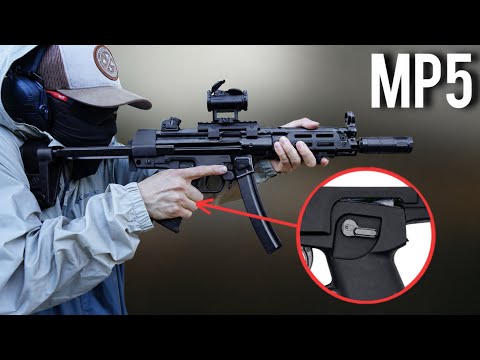
PDWs encompass a range of firearms, including pistol-caliber carbines (PCCs) like the Kriss Vector and MP5K variants, folding carbines such as the Kel-Tec SUB2000 and S&W FPC, large-capacity handguns like the Staccato XC, and potent short-barreled rifles in calibers like .300 Blackout.

Related News

All News →

More Tactical & Gear Videos You Might Like

More from Honest Outlaw

View all →