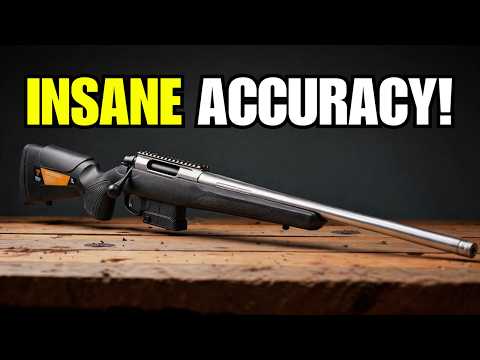
R700 5R to 1,100yds/ .308Win: Practical Accuracy (Remington M40 M24 sniper base + SWFA 10x42)

Published on August 23, 2018
Duration: 4:42

This guide details a practical accuracy test of the Remington 700 5R MilSpec in .308 Winchester, pushing its capabilities to 1,100 yards. The video highlights the rifle's performance under challenging conditions, including gusty winds and high temperatures, with expert commentary from Henry Chan and Josh Mazzola. It emphasizes precise wind calls and shooter familiarity for consistent long-range hits.

Quick Summary

The Remington 700 5R MilSpec in .308 Winchester was tested for practical accuracy up to 1,100 yards. Equipped with an SWFA 10x42 scope and HS Precision stock, it demonstrated consistent hits to 1,000 yards. At 1,100 yards, transonic ballistics and wind made shots challenging, but achievable with expert wind calls.

Chapters

  1. 00:00Introduction and Rifle Specs
  2. 00:56Short to Mid-Range Engagement (200y - 500y)
  3. 01:24Long-Range Engagement (600y - 800y)
  4. 02:01Extreme Long-Range (900y - 1,100y)
  5. 03:03Post-Shoot Analysis

Frequently Asked Questions

What are the key specifications of the Remington 700 5R MilSpec rifle tested?

The rifle features a 24-inch stainless barrel with 5R rifling and a 1-11.25 twist rate, chambered in .308 Winchester (7.62x51mm). It's equipped with an HS Precision stock and a Badger Ordnance magazine conversion.

How did the Remington 700 5R perform at extreme long ranges (900-1100 yards)?

The rifle achieved hits at 900 and 1,000 yards. At 1,100 yards, the .308 Winchester bullet entered the transonic range, making hits more challenging due to wind sensitivity, but a final impact was confirmed.

What scope was used, and how effective was it for long-range shooting?

A fixed power SWFA SS Classic 10x42mm scope was utilized. The speakers found its 10x magnification to be effective for engaging torso-sized targets at long distances in this practical accuracy test.

What environmental conditions were present during the test, and how did they affect shooting?

The test occurred in high heat (102°F) with significant wind (10 mph sustained, 18 mph gusts). These conditions required precise wind calls and highlighted the increased difficulty of hitting targets in the transonic range.

Related News

All News →

More Tactical & Gear Videos You Might Like

More from 9-Hole Reviews

View all →