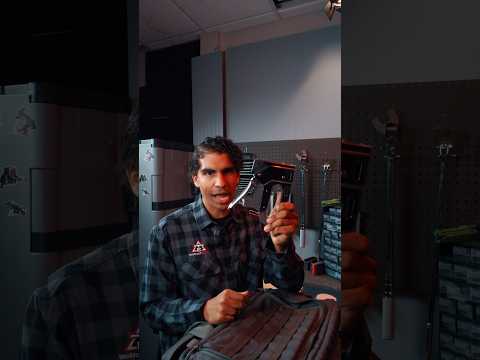
Scope Reticles Explained with Former USCG Precision Marksmanship Instructor Billy Leahy

Published on January 26, 2021
Duration: 23:35

This guide breaks down common scope reticle systems, explaining their measurement units (MRAD and MOA) and specific features like subtensions, grid types, and specialized holds. Expert instruction from former USCG Precision Marksmanship Instructor Billy Leahy clarifies how to utilize these reticles for accurate range estimation and holdovers in various shooting scenarios. Understanding these reticles is crucial for maximizing the effectiveness of your optic.

Quick Summary

Scope reticles primarily use MRAD or MOA measurement systems. MRAD subtensions are consistent across magnification, often in 0.1-0.2 Mil increments. MOA uses different angular values, typically adjusted in 1 MOA increments. Advanced reticles like the Horus Tremor3 feature specialized holds and fine adjustments, while 'Christmas Tree' designs aid complex calculations.

Chapters

  1. 00:00Introduction to Scope Reticles
  2. 00:35Standard Mildot Reticle Explained
  3. 02:17Leupold TMR Reticle Explained
  4. 03:32Nightforce Mil-XT Reticle Explained
  5. 07:25Horus Tremor3 Reticle Explained
  6. 13:22Vortex EBR-7C Reticle Explained
  7. 14:45Vortex EBR-2C Reticle Explained
  8. 15:19Vortex EBR-4 (MOA) Reticle Explained

Frequently Asked Questions

What are the main types of scope reticle measurement systems?

The primary measurement systems for scope reticles are MRAD (Milliradian) and MOA (Minute of Angle). MRAD uses 10 Mils per revolution, with subtensions often in 0.1 or 0.2 Mil increments. MOA uses increments typically around 1 MOA, with adjustments often in 1/4 or 1/2 MOA clicks.

How do MRAD and MOA reticles differ in practical use?

MRAD subtensions remain consistent across magnification levels, simplifying range estimation and holdovers. MOA subtensions also remain constant, but the angular value is different. Shooters must be consistent with either MRAD or MOA for their scope adjustments and reticle estimations to avoid errors.

What is a 'Christmas Tree' reticle?

A 'Christmas Tree' reticle, like the Nightforce Mil-XT, is a type of gridded reticle designed for long-range shooting. It features extensive horizontal and vertical stadia lines, often with numbered markings, to facilitate precise range estimation, windage holds, and elevation adjustments.

What are specialized features found in advanced scope reticles like the Horus Tremor3?

Advanced reticles like the Horus Tremor3 incorporate specialized features such as mover holds for tracking moving targets, refined milling increments (e.g., 0.1 Mil) for precise adjustments, and wind dots calibrated to specific ballistic profiles, enhancing accuracy in complex shooting scenarios.

Related News

All News →

More Tactical & Gear Videos You Might Like

More from Tactical Hyve

View all →