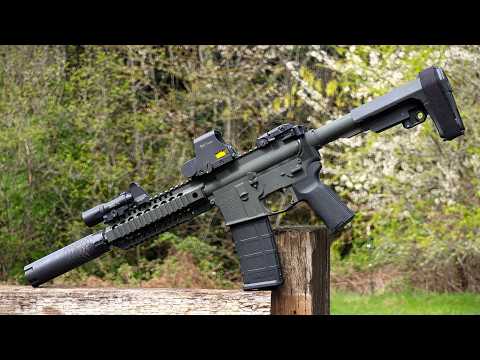
SEAL Team Six Commander Breaks Down Our Gun Builds II

Published on November 26, 2025
Duration: 26:05

Retired Navy SEAL Team Six Commander Jim Foreman provides an expert evaluation of various personal firearm builds, including AR-15s, an AK pistol, and an AR-10. He offers detailed critiques on suppressor backpressure, weapon balance, optic height, and ergonomic considerations, drawing from extensive combat experience. The review highlights specific models like the PWS MK111 MOD2 and Sig Sauer MCX Spear, offering practical insights for firearm enthusiasts and tactical operators.

Quick Summary

Retired Navy SEAL Team Six Commander Jim Foreman evaluates personal firearm builds, emphasizing weapon balance, suppressor effects, and ergonomic optimization. He critiques specific models like the PWS MK111 MOD2 and Sig Sauer MCX Spear, offering expert insights derived from combat experience for improved tactical performance.

Chapters

  1. 00:29Introduction and Guest Profile
  2. 01:43Josh's Bushmaster LEO Setup
  3. 04:38Joshua's AK 104 Build
  4. 06:50Ryan's PWS MK111 MOD2
  5. 10:39Kaya's Sig Sauer MCX Spear
  6. 12:27Kaya's TTI VSeven Harbinger
  7. 14:12Brandon's Griffin & Geissele Build
  8. 15:10Jim's Zenith Roller-Delayed Setup

Frequently Asked Questions

What are the key considerations when evaluating a firearm build for tactical use?

Key considerations include weapon balance for quick target transitions, suppressor effectiveness and its impact on gas systems, optic height for proper sight picture, and overall ergonomics for comfortable and efficient handling during prolonged use.

How does suppressor backpressure affect firearm performance?

High suppressor backpressure can force gas and smoke back into the shooter's face, obscuring vision and potentially increasing fouling. This highlights the importance of gas management systems designed to mitigate these effects, especially in suppressed firearms.

Why is weapon balance important in tactical firearms?

Proper weapon balance is crucial for rapid target re-acquisition and follow-up shots. A firearm that is too front-heavy or rear-heavy can hinder maneuverability and slow down the shooting process, impacting overall effectiveness in dynamic situations.

What ergonomic adjustments can improve a firearm's handling?

Ergonomic improvements include optimizing optic height for a consistent cheek weld, relocating accessory controls like light switches for easier access with different grips, and selecting appropriate stocks or grips to enhance control and comfort.

Related News

All News →

More Tactical & Gear Videos You Might Like

More from ClassicFirearms

View all →