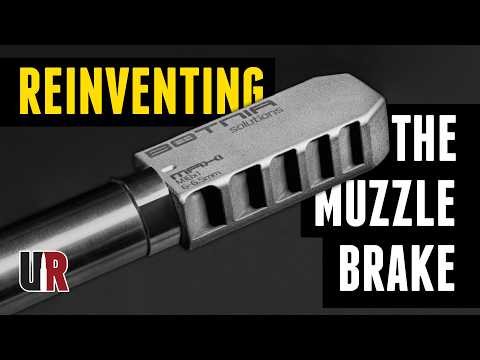
Smyth Busters: Does a Suppressor Increase Felt Recoil?

Published on June 15, 2021
Duration: 2:39

This video debunks the myth that suppressors increase felt recoil. Steve and Caleb from Brownells explain that suppressors function similarly to muzzle brakes by redirecting gas, thus reducing recoil. They also note that the added mass of a suppressor can further decrease recoil. While acknowledging that suppressors can increase bolt thrust and velocity in gas-operated firearms, they assert that the muzzle recoil reduction still outweighs this effect, leading to an overall decrease in perceived recoil.

Quick Summary

Suppressors do not increase felt recoil; they generally decrease it. By redirecting expanding gases, a suppressor acts like a muzzle brake. While it can increase bolt velocity in gas-operated firearms, the muzzle recoil reduction typically outweighs this, leading to a net decrease in perceived recoil. The added mass of the suppressor also contributes to recoil reduction.

Chapters

  1. 00:00Intro & Myth Introduction
  2. 00:16Origin of the Myth
  3. 00:43Suppressor Functionality
  4. 01:03Suppressor vs. Muzzle Brake
  5. 01:17Gas Operated Firearms & Bolt Thrust
  6. 01:45Semi-Automatic Rifle Example
  7. 02:10Conclusion: Myth Busted

Frequently Asked Questions

Does adding a suppressor to a firearm increase felt recoil?

No, adding a suppressor generally decreases felt recoil. While it can increase bolt thrust and velocity in gas-operated firearms, the recoil reduction at the muzzle is typically greater, resulting in a net decrease in perceived recoil. The suppressor also acts like a muzzle brake by redirecting gas.

How does a suppressor affect recoil compared to a muzzle brake?

A suppressor functions similarly to a muzzle brake by redirecting expanding gases away from the shooter, reducing recoil. In fact, a suppressor often reduces recoil more than a muzzle brake due to its added mass and the redirection of gas.

Can suppressors cause issues with gas-operated firearms?

Yes, suppressors can increase bolt thrust and bolt velocity in gas-operated firearms because of trapped gas. This means the bolt carrier group cycles harder and faster. However, this effect can often be managed with adjustable components like buffers or gas blocks.

What is the physics behind a suppressor reducing recoil?

The expanding gases exiting the muzzle push the bullet forward. A suppressor redirects these gases outward and rearward, away from the shooter's line of sight and the firearm's axis. This redirection prevents the gases from pushing directly backward on the firearm, thus reducing felt recoil.

Related News

All News →

More Tactical & Gear Videos You Might Like

More from Brownells, Inc.

View all →