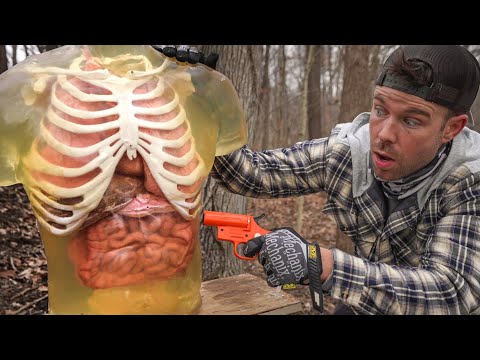
The 22LR "PINBALL" Theory, Is It TRUE??? (vs HEAD)

Published on June 17, 2022
Duration: 10:11

This video from 1ShotTV investigates the 'pinball theory' of the .22LR round, which posits it bounces inside the skull. Using a Ballistic Dummy Labs zombie bust, the host tests CCI Standard Velocity and CCI Mini-Mag rounds. The results show entry wounds but no exit, with bullets either stopping or fragmenting, debunking the bouncing theory. The host emphasizes safety with body armor due to ricochet risks.

Quick Summary

The .22LR "pinball theory," suggesting rounds bounce inside the skull, was tested and largely debunked. Using a ballistic dummy, .22LR CCI Standard Velocity and Mini-Mag rounds created entry wounds but no exit, with bullets stopping or fragmenting, not ricocheting internally. Safety gear like body armor is advised due to ricochet risks.

Chapters

  1. 00:00Intro: The .22LR Pinball Theory
  2. 01:05Ballistic Testing Subject: Zombie Bust
  3. 02:19Gear Showcase: Premier Body Armor
  4. 02:45First Shot: CCI Standard Velocity
  5. 04:14Second Shot: CCI Mini-Mag
  6. 06:34Internal Analysis and Dissection
  7. 08:57Shotgun Finale

Frequently Asked Questions

Does the .22LR "pinball theory" hold true?

No, the "pinball theory" regarding .22LR rounds bouncing inside a skull is largely a myth. Ballistic testing shows that .22LR bullets typically enter and either stop within the skull or fragment, rather than ricocheting extensively inside.

What ammunition was used to test the .22LR pinball theory?

The test utilized two types of .22LR ammunition: CCI Standard Velocity, featuring a Lead Round Nose bullet, and CCI Mini-Mag, a higher velocity round with a Copper-Plated Round Nose bullet. Both were tested on a ballistic dummy.

What safety precautions are recommended when testing firearm myths?

When conducting ballistic tests, especially on hard targets like synthetic skulls, it's crucial to wear protective gear such as body armor. This mitigates the risk of ricochets, which can occur with smaller caliber rounds like the .22LR.

What was the outcome of the ballistic dummy dissection?

Upon dissecting the ballistic dummy, the host found straight wound channels through the simulated brain matter. The .22LR bullets did not exhibit "pinballing" behavior; they simply stopped or fragmented upon impact with the back of the skull.

Related News

All News →

More Tactical & Gear Videos You Might Like

More from 1ShotTV

View all →