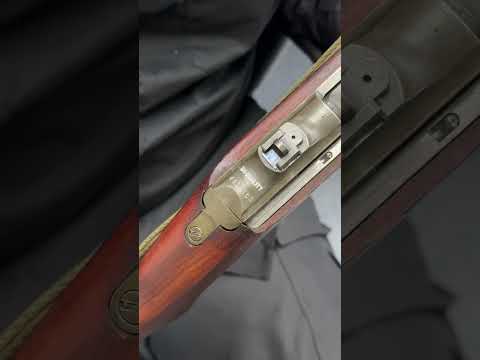
We Got It To Work! | WW2 M1 Carbine Infrared Scope Restoration

Published on April 2, 2022
Duration: 17:03

This video details the restoration and operational demonstration of a World War II M1 Carbine equipped with an infrared scope. The restoration involved replacing original vacuum tubes and components with modern equivalents, such as a flyback transformer, to achieve the necessary 20,000 volts. The scope utilizes a cathode ray tube and an infrared lamp to provide first-generation night vision, primarily for perimeter defense at close ranges, rather than long-range sniping.


Quick Summary

The WW2 M1 Carbine infrared scope was a critical piece of early night vision technology for perimeter defense, not a long-range sniper system. Its restoration involved replacing original vacuum tubes with modern electronics like flyback transformers to generate 20,000 volts, enabling detection of targets up to 50 yards in darkness.

Chapters

  1. 00:08Introduction & Excitement
  2. 00:40The WW2 M1 Carbine Infrared Scope
  3. 01:10Restoration Success: It Works!
  4. 01:54Historical Context of Infrared Scopes
  5. 02:34Original Battery Pack and Weight
  6. 03:10The Original Case and Components
  7. 03:27Before and After Restoration
  8. 03:49Meet John: The Restoration Expert
  9. 04:15Hooking Up the Scope and Power
  10. 04:25Power Supply Unit Details
  11. 04:50Power Pack Voltage Conversion
  12. 05:08Original WW2 Unit vs. Modern Components
  13. 05:36Modern Components Used in Restoration
  14. 06:04Flyback Transformer Explained
  15. 06:39Voltage Requirements for Components
  16. 07:15Assembling the System
  17. 07:37Portable Pouch Integration
  18. 07:58Connecting High and Low Voltage Leads
  19. 08:46Grounding and Stress Wire
  20. 08:51How the Scope Works: CRT Technology
  21. 09:25Scope Controls: Focus and Reticle
  22. 09:46Infrared Lamp and Beam
  23. 10:10First Power-On Test
  24. 10:28The Green Hue of Night Vision
  25. 10:42Daytime Visibility Test
  26. 11:03Demonstration Target: Tom
  27. 11:19Waterproof Knapsack Design
  28. 11:43Going Outside for Night Test
  29. 11:53Clarifying Scope's Purpose: Not a Sniper Rifle
  30. 12:29Historical Use Case: Perimeter Defense
  31. 12:57Night Test: Looking Through the Scope
  32. 13:06Activating the Infrared Lamp
  33. 13:24Visibility with Infrared ON
  34. 13:35Reflective Surfaces in Darkness
  35. 14:32Kurt Walks Through Field of View
  36. 14:48Nighttime Range of Clarity
  37. 15:00Image Analysis: Woods Behind Target
  38. 15:15Focus Challenges Filming Through Scope
  39. 15:29Training Required for Use
  40. 15:52Making Out a Person in the Image
  41. 16:03A Real Time Machine Experience
  42. 16:18Visibility Comparison: Eye vs. Camera
  43. 16:25Infrared ON vs. OFF
  44. 16:30Impact of White Shirt on Visibility
  45. 16:41First Generation Night Vision Summary
  46. 16:52Conclusion and Thanks

Frequently Asked Questions

What was the primary purpose of the WW2 M1 Carbine infrared scope?

The WW2 M1 Carbine infrared scope was primarily used for perimeter defense at night. It allowed soldiers to detect enemy movement within approximately 50 yards, helping to prevent surprise attacks and test defenses in complete darkness.

What modern components were used to restore the WW2 infrared scope?

The restoration replaced original vacuum tubes and vibrators with modern components. Key replacements include a flyback transformer to generate 20,000 volts and a zero-voltage switch to drive it, along with a 12-volt battery system.

How does the WW2 infrared scope work?

The scope uses a cathode ray tube (CRT) with an electron gun and phosphor screen. An infrared lamp emits a beam, which is reflected off targets and picked up by the scope, creating a visible image on the screen, similar to early night vision technology.

What are the limitations of the WW2 M1 Carbine infrared scope?

The scope is not a magnification device and has a limited effective range, typically around 40-50 yards at night. It is also sensitive to reflective surfaces and requires careful focus adjustment for optimal use. The system is heavy, weighing around 40 pounds with the battery pack.

Related News

All News →

More Tactical & Gear Videos You Might Like

More from Legacy Collectibles

View all →