WHAT HAPPENS IF YOU SHOOT A PROPANE TANK?

Published on April 29, 2017
Duration: 2:31

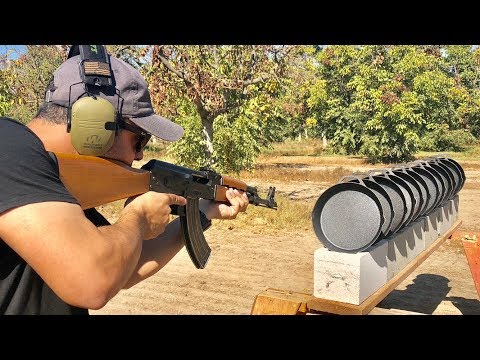
This guide details an experiment by Edwin Sarkissian testing the ignition potential of propane tanks when struck by .50 BMG ammunition. It covers the use of both Full Metal Jacket (FMJ) and Armor Piercing Incendiary Tracer (APIT) rounds, demonstrating that even incendiary rounds may not reliably ignite propane without an external flame source. The experiment highlights the importance of understanding ammunition types and their effects on pressurized containers.

Quick Summary

Shooting a propane tank with a .50 BMG FMJ round causes gas venting but no ignition. An APIT round, designed to be incendiary, also failed to reliably explode the tank in tests, highlighting that external ignition sources are often crucial for igniting propane gas effectively.

Chapters

  1. 00:00Introduction and Experiment Setup
  2. 00:50Full Metal Jacket (FMJ) Test
  3. 01:25FMJ Results Inspection
  4. 01:43Armor Piercing Incendiary Tracer (APIT) Test
  5. 02:02APIT Results and Conclusion

Frequently Asked Questions

What happens when you shoot a propane tank with a .50 BMG FMJ round?

When a .50 BMG Full Metal Jacket (FMJ) round impacts a propane tank, it creates entry and exit holes, allowing the propane gas to vent rapidly. However, the FMJ round lacks incendiary properties, so it typically does not ignite the gas on its own.

Can a .50 BMG APIT round explode a propane tank?

In tests conducted by Edwin Sarkissian, a .50 BMG Armor Piercing Incendiary Tracer (APIT) round, despite its incendiary component, did not cause a propane tank to explode. This suggests that an external ignition source, like a flare, may be necessary for reliable ignition.

What is the difference between FMJ and APIT .50 BMG ammunition?

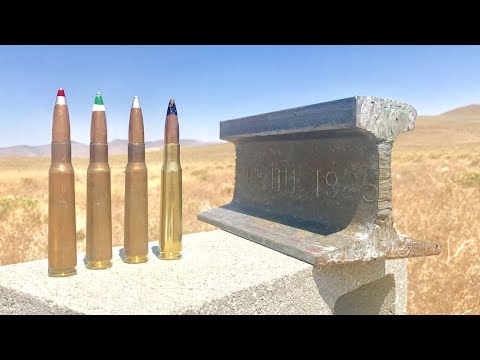
A .50 BMG FMJ (Full Metal Jacket) round has a core encased in metal, lacking incendiary or explosive elements. An APIT (.50 BMG Armor Piercing Incendiary Tracer) round is designed to penetrate armor, ignite upon impact, and leave a tracer trail, making it more volatile.

Why is an external ignition source often needed for propane tank explosions?

Propane gas needs a specific concentration in the air and an ignition source to combust or explode. While incendiary rounds can provide heat, they may not always reach the necessary temperature or duration to ignite the dispersed gas effectively without a sustained flame.

More Tactical & Gear Videos You Might Like

More from Edwin Sarkissian

View all →