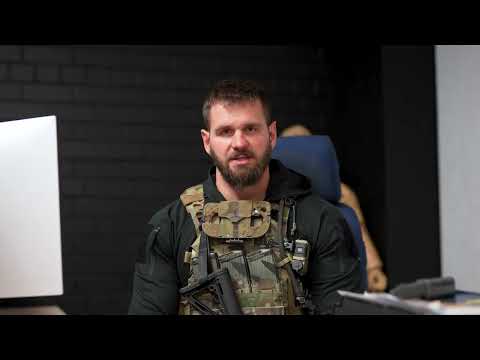
191: Tim Selbrede on the Evolution of Training Night Vision

Published on March 25, 2024
Duration: 73:39

Tim Selbrede, a graduate of a Tactical Night Vision Instructor course, discusses the evolution of night vision training from basic military issuance to more comprehensive instruction. He emphasizes the importance of fundamental skills like proper device handling, battery management under stress, and malfunction drills, highlighting how these 'small things' are critical for operational success. The discussion also touches on advanced topics like zeroing lasers and the differences between military and law enforcement applications.


Quick Summary

Tim Selbrede emphasizes that effective night vision training evolves from basic military operation to comprehensive skill development, including understanding human-eye interaction, mission-driven gear selection, and mastering fundamental tasks like battery management and malfunction drills under stress. He highlights the importance of these 'small things' for operational success in low-light conditions.

Chapters

  1. 00:00Introduction: Tim Selbrede & Night Vision Training
  2. 01:22Early Military Night Vision Experience
  3. 04:05Modern Night Vision & Instructor Course
  4. 06:03Oral History vs. Formal Night Vision Training
  5. 08:41Changing Night Vision Instruction Methods
  6. 10:13Malfunction Drills Under Night Vision
  7. 12:05Critical Battery Swap Drills
  8. 15:05Battery Selection: Lithium vs. Others
  9. 17:03Night Vision Device Cost & Maintenance
  10. 18:33Practicing Under Night Vision: Beyond Shooting
  11. 20:26Passive Aiming Explained
  12. 21:47Near Peer Adversaries & IR Spectrum
  13. 23:21Law Enforcement vs. Military Training Application
  14. 25:11Understanding Low-Percentage Shots
  15. 26:00Knowing Your Holds: Aim vs. Impact
  16. 27:25Training Holds with Mantis Blackbeard
  17. 30:11Well-Rounded Shooter: Live Fire, Sim, Dry Fire
  18. 31:35Micro-Skills Under Night Vision
  19. 32:37Night Vision in Gun Culture: Focus on Shooting
  20. 34:39Physiology of Sight & Night Vision Training
  21. 36:05Zeroing: Parallel vs. Converging
  22. 40:41Laser Diffusion and Zeroing Limitations
  23. 44:36Night Shooting: Finesse Golf for Giants
  24. 45:00Shooting as a Diminishing Skill?
  25. 46:18Improvement in American Rifleman Skills
  26. 49:03Innovation Driven by Pursuit of Relevancy
  27. 51:01Advice for Younger Self: Learn Firearms Fundamentals
  28. 53:50Beyond CQB: Physical Fitness & Malfunctions
  29. 56:09Hierarchy of Training: Malfunctions First
  30. 57:25CQB as Pinnacle vs. Foundational Skills
  31. 58:35Community Days & Skill Sharing
  32. 59:09Darcy Courses: Truth Island & TUSK
  33. 62:00Don't Wait for Perfect Gear to Train
  34. 64:22Learning for Community Resilience
  35. 66:04Moral Conviction in Capability
  36. 67:16TUSK: Controlled Failure & Skill Application
  37. 68:01Contributing to Community Through Training

Frequently Asked Questions

What are the key differences between early military night vision training and modern approaches?

Early military night vision training often focused on basic operation and equipment care, with less emphasis on understanding the human-eye interaction or advanced tactical applications. Modern training, like the Tactical Night Vision Instructor course, delves deeper into the physiology of sight, mission-specific gear selection, and comprehensive skill development beyond just shooting.

Why is battery management crucial for night vision operations?

Battery management is critical because inconsistent battery life can severely hinder operations. Practicing quick, in-situ battery swaps under stress, and using reliable lithium batteries stored in accessible locations, ensures NVDs remain functional throughout missions, preventing critical failures in low-light environments.

What is passive aiming in night vision, and why is it important?

Passive aiming involves using a red dot sight for target acquisition without activating an infrared (IR) laser. This is important for covert operations as it doesn't reveal the shooter's position via an IR beam, making it a valuable skill when operating against near-peer adversaries who may also possess night vision capabilities.

How does understanding 'holds' apply to shooting with night vision?

Understanding 'holds' refers to knowing the difference between your point of aim (where your optic is directed) and your point of impact (where the bullet strikes), due to the optic's height over the firearm's bore. This knowledge is crucial for accurate shooting, especially at close ranges, and must be practiced and retained even when shooting under night vision.

Related News

All News →

More Training & Techniques Videos You Might Like

More from REDACTED Culture Cast

View all →