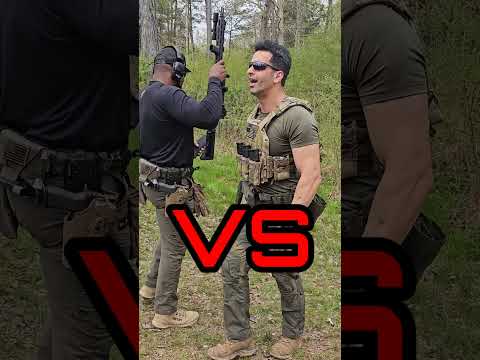
AK Variants Explained – Damage vs Control Breakdown!

Published on October 25, 2025
Duration: 0:17

This video from CF Clips, featuring an experienced firearms instructor, breaks down the damage versus control trade-off in AK variants. It highlights how projectile size impacts perceived 'damage power' and shooting control, using the 5.56mm round as an example of effectiveness despite smaller size. The instructor emphasizes that higher impact can sometimes come at the cost of reduced firearm control.

Quick Summary

An experienced firearms instructor explains the damage versus control trade-off in AK variants. Larger projectiles may offer more impact but less control, while smaller rounds like 5.56mm are highly effective and often easier to manage during shooting.

Chapters

  1. 00:00Introduction: AK Variants Damage vs Control
  2. 00:05Effectiveness of 5.56mm Projectiles
  3. 00:09Damage vs. Control Trade-off Explained

Frequently Asked Questions

What is the primary trade-off discussed regarding AK variants?

The primary trade-off discussed is between a firearm's 'damage power' and its 'control.' A weapon that might inflict more damage upon hitting a target could be harder to control during shooting.

How does projectile size relate to firearm performance?

Projectile size significantly influences perceived 'damage power.' Larger projectiles generally deliver more impact, while smaller projectiles, like 5.56mm, can be highly effective and often offer better firearm control.

Is 5.56mm ammunition considered effective?

Yes, the 5.56mm projectile is noted as being very effective in real-life scenarios, despite potentially being perceived as having less raw 'damage power' than larger rounds. Its effectiveness is a key point in the damage vs. control discussion.

More Training & Techniques Videos You Might Like

More from CF Clips

View all →