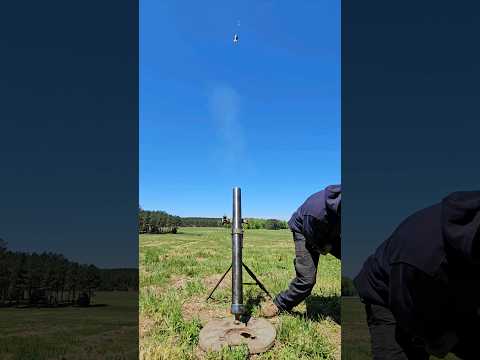
ARTILLERY LANDS & GROOVES - Cannon Rifling to Spin-Stabilize 106mm Recoilless Rifle Bullet #military

Published on August 22, 2024
Duration: 0:50

This video explains the principle of spin stabilization in firearms, specifically demonstrated with a 106mm recoilless rifle. It details how the projectile's driving band engages with the barrel's rifling to impart rotation, crucial for accuracy. The expert-level explanation highlights the technical interface between ammunition and the weapon's mechanics.

Quick Summary

Rifling in a 106mm recoilless rifle barrel, such as the M40A1, stabilizes projectiles by imparting spin. The projectile's driving band engages the barrel's lands and grooves, forcing rotation that enhances accuracy and stability during flight. The M346A1 cartridge is a specific HE-T round designed for this system.

Chapters

  1. 00:00Projectile and Barrel Interface
  2. 00:16Visualizing Barrel Rifling
  3. 00:34Weapon Identification and Markings

Frequently Asked Questions

How does rifling stabilize a 106mm recoilless rifle projectile?

Rifling in the barrel has spiral grooves that engage with the projectile's driving band. This engagement forces the projectile to spin along its axis as it exits the barrel, providing gyroscopic stability for accurate flight.

What is the M346A1 cartridge used with?

The M346A1 cartridge is a 106mm High Explosive Tracer (HE-T) round specifically designed to be fired from recoilless rifles like the M40A1, utilizing its rifling for stabilization.

What is the weight of the M40A1 Recoilless Rifle?

The M40A1 Recoilless Rifle is marked as weighing 245 lbs. This indicates it is a substantial piece of military equipment requiring specific handling and deployment procedures.

What is the primary function of the driving band on a projectile?

The driving band on a projectile, like that on the M346A1 cartridge, is designed to fit into the rifling of the barrel. Its primary function is to transfer the rotational force from the barrel to the projectile, enabling spin stabilization.

More Training & Techniques Videos You Might Like

More from Ordnance

View all →