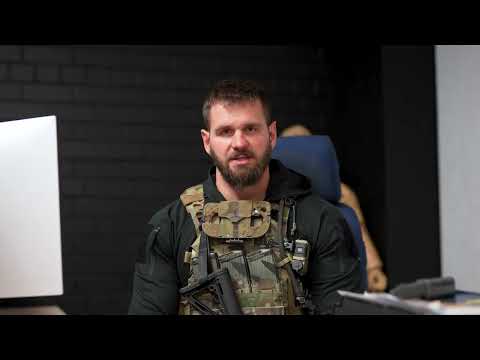
BCM Regiment Blades - built for US Army Special Forces - available from BCM

Published on July 26, 2022
Duration: 8:10

This video details a method for integrating blade use with existing punching skills, particularly for individuals with tactical backgrounds like shooters. The core philosophy is to adapt the blade to familiar movements, making it intuitive and learnable within a short timeframe. The emphasis is on using the blade for powerful stabbing motions, leveraging the mechanics of punches and draws already possessed by the user, rather than complex cutting techniques.

Quick Summary

BCM Regiment Blades are designed to integrate with existing punching and shooting skills, allowing users to leverage familiar movements for rapid deployment and effective stabbing. The philosophy emphasizes using the 'pointy end' for deep penetration into vital areas, mirroring the mechanics of a pistol draw and punch for intuitive use.

Chapters

  1. 00:05Tactical Group & Combatives Training
  2. 00:22Complexity of Blade Systems
  3. 00:35Designing a Blade for Punching
  4. 00:55Training Shooters with Blades
  5. 01:15The Pointy End Goes In
  6. 02:42Meeting Alex & Combatives Philosophy
  7. 03:29Testing and Real-Life Situations
  8. 04:14Blade Design for Shooters
  9. 04:42Point vs. Edge Damage
  10. 05:38Incorporating Blade into Punching
  11. 05:55Weapon Deployment Speed
  12. 06:13Blade Angle for Shooters
  13. 06:30Blade Mechanics Like Boxing
  14. 07:02Training Without Dedicated Blade Practice
  15. 07:18Consistent Draw Stroke
  16. 07:42Being First in Combat

Frequently Asked Questions

How are BCM Regiment Blades designed to be used with existing skills?

BCM Regiment Blades are designed to integrate with existing punching and shooting skills. The philosophy is to adapt the blade to familiar movements, allowing users to leverage their current abilities for rapid deployment and effective stabbing, rather than learning entirely new complex systems.

What is the primary combat principle emphasized for blade use?

The primary combat principle emphasized is that 'the pointy end goes in the target.' This focuses on direct, powerful penetration to vital areas, rather than superficial cuts, which are considered less effective in incapacitating an opponent.

How does the design of the BCM Regiment Blade facilitate its use by shooters?

The blade's design, including a hole in the handle for a lower grip and a bent blade, mimics the feel and angle of a pistol. This allows shooters to draw and present the blade similarly to a firearm, utilizing their existing muscle memory and training.

What is the philosophy behind using greater violence in combat?

The philosophy is that greater violence overcomes lesser violence. This means that in a confrontation, the individual employing more decisive and overwhelming force is likely to prevail. It encourages aggressive, proactive engagement.

Why is the 'pointy end' more critical than the edge for this blade design?

The 'pointy end' is critical because it allows for deep penetration into vital areas like arteries and organs, causing significant damage. Cuts from the edge are generally superficial and less likely to be immediately incapacitating compared to a well-placed stab.

Related News

All News →

More Training & Techniques Videos You Might Like

More from BravoCompanyUSA

View all →