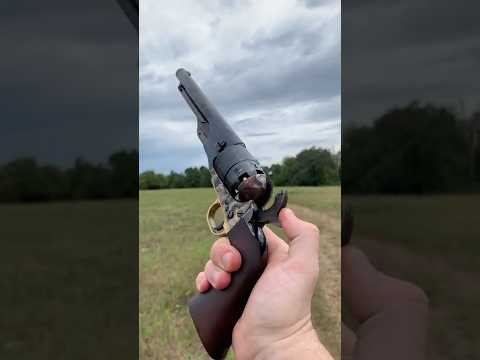
Black Powder Revolvers- An American Legend | Tactical Rifleman

Published on September 9, 2022
Duration: 20:11

This video provides a historical overview and practical demonstration of loading and handling black powder revolvers, focusing on the Colt Walker and Navy/Old Army models. It details the process of loading powder, wads, and balls into the cylinder, emphasizing safety and historical context. The presenters highlight the evolution from muzzleloaders to the innovations of Samuel Colt, including the revolving cylinder and the development of ammunition for these iconic American firearms.


Quick Summary

Black powder revolvers were loaded by pouring powder into each chamber, followed by a wad and a lead ball, which was then seated with the loading lever. A percussion cap was placed on the nipple to ignite the powder. Challenges included crossfire and mechanical jams, but they offered surprising accuracy and historical significance.

Chapters

  1. 00:57Introduction to Black Powder Revolvers
  2. 01:08Sponsor: JX Tactical Holsters
  3. 02:01History of Ammunition and Pistols
  4. 02:21The Alamo and Muzzleloaders
  5. 02:51Samuel Colt and the Revolving Cylinder
  6. 03:23The Colt Walker Revolver
  7. 04:09Loading the Walker/Dragoon Pistol
  8. 04:27Muzzle Loading Cylinder and Percussion Cap
  9. 04:49Samuel Colt's Loading System
  10. 05:03Loading Process Demonstration
  11. 06:00Measuring Black Powder
  12. 06:32Loading the Old Army
  13. 07:00Using Pyrodex
  14. 07:53Using Wads to Prevent Crossfire
  15. 08:47Loading the Ball
  16. 09:57Loading the Next Cylinder
  17. 10:31History: The Navy Model
  18. 10:56History: The Old Army Model (1872)
  19. 11:07Cylinder Swapping and Speed Loading
  20. 11:52Transition to Cartridge Cylinders
  21. 12:2245 Long Colt Ammunition
  22. 12:49Development of the Single Action
  23. 13:10Ejecting Cases
  24. 14:14Straight Wall Cases and Rifle Calibers
  25. 14:43Disadvantages of Black Powder Revolvers
  26. 15:11Cap Issues and Jams
  27. 15:42Paper Wads and Misfires
  28. 16:04Remarkable Reliability Example
  29. 16:27Nipple Maintenance
  30. 17:23Maintenance and Fun Factor
  31. 17:27No Tax Stamp and Regulations
  32. 17:38Let's Go Shoot!
  33. 18:14Shooting Impressions: Accuracy
  34. 18:43Police Model Accuracy
  35. 19:03Favorite Thing: America
  36. 19:14Frontier and Civil War Development
  37. 19:27Questions and Subscriptions
  38. 19:50Next Week's Video

Frequently Asked Questions

How were black powder revolvers loaded historically?

Historically, black powder revolvers were loaded by first ensuring the cylinder was on half-cock. Then, powder was measured and poured into each chamber, followed by a wad and a lead ball. The loading lever was used to seat the ball firmly, and finally, a percussion cap was placed on the nipple to ignite the powder.

What were the main challenges or disadvantages of using black powder revolvers?

Key disadvantages included the potential for the loading lever to interfere with cylinder rotation during firing, the tendency for percussion caps to break and jam the mechanism, and the risk of 'crossfire' where powder in one chamber could ignite an adjacent one. Moisture could also lead to misfires.

How did the Colt Navy and Old Army models differ?

The Colt Navy model featured a half-frame design, while the later Colt Old Army model adopted in 1872 had a more robust full frame. The Old Army also allowed for quicker cylinder swapping, serving as an early form of speed loading for faster reloads.

What is the significance of black powder revolvers in terms of regulation?

Black powder revolvers manufactured before 1897 are subject to minimal regulation in the United States. This means they can often be mailed directly to the buyer and do not require a tax stamp, making them accessible for collectors and enthusiasts.

Related News

All News →

More Training & Techniques Videos You Might Like

More from Tactical Rifleman

View all →