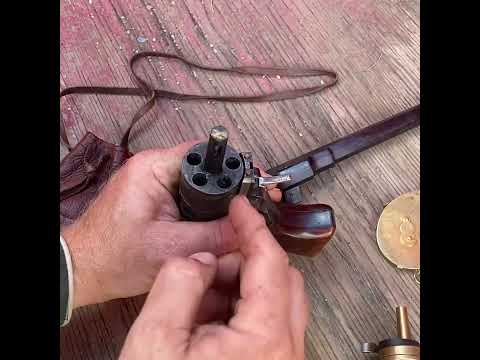
Blunderbuss - Buckshot Patterning

Published on October 8, 2020
Duration: 9:24

This guide details a specific technique for testing the patterning of a flintlock blunderbuss, as demonstrated by Karl Kasarda of InRangeTV. It covers the precise loading procedure, including powder charge, projectile count, and the critical role of wadding for consistent ignition and projectile spread. The expert-level instruction emphasizes practical experimentation to achieve predictable results with historical firearms.

Quick Summary

Karl Kasarda of InRangeTV demonstrates blunderbuss buckshot patterning, detailing a loading procedure with 100 grains of black powder, .32 caliber balls, and the crucial role of wadding. He highlights that both lubricated and improvised creosote bush wadding yield tight patterns, while no wadding results in wide spread. Expert advice is given on flintlock ignition via pan charging.

Chapters

  1. 00:00Introduction: Blunderbuss Firing
  2. 00:12Blunderbuss vs. Musketoon & Lore
  3. 01:54Loading Procedure: Powder & Projectiles
  4. 03:02Flintlock Ignition Tip: Pan Charging
  5. 03:36Test 1: Lubricated Wad Patterning
  6. 04:16Test 2: No Wad Patterning
  7. 05:24Test 3: Improvised Creosote Wad
  8. 06:41Creosote Wad Results & Analysis
  9. 07:52Conclusion & Channel Support

Frequently Asked Questions

How is a flintlock blunderbuss loaded for patterning tests?

A flintlock blunderbuss is loaded with 100 grains of black powder, followed by a 10-gauge lubricated wad, 15 rounds of .32 caliber lead round balls, and a paper over-shot wad. Proper pan charging with an air gap is crucial for ignition.

What is the effect of wadding on blunderbuss buckshot patterns?

Using a lubricated wad or even improvised natural wadding like creosote bush branches significantly tightens the shot pattern. Firing without any wad results in a much wider, less effective spread of projectiles.

What are the key considerations for flintlock ignition?

For reliable flintlock ignition, Karl Kasarda emphasizes creating an air gap between the powder in the pan and the touchhole. This allows for a 'jet of flame' that ignites the main powder charge more quickly and consistently.

Can historical firearms like blunderbusses be loaded with improvised materials?

While improvised materials like creosote bush branches can be effective as wadding, Karl Kasarda warns against using hard scrap like rocks or glass, as these can severely damage the firearm's barrel.

More Training & Techniques Videos You Might Like

More from InRangeTV

View all →