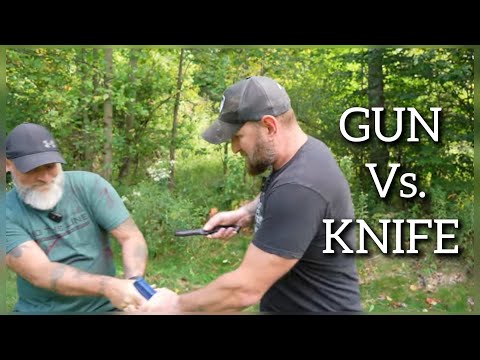
Defensive Draw- How to Safely & Efficiently Draw From the Holster

Published on September 4, 2022
Duration: 15:07

This video breaks down the nuances of a defensive firearm draw, emphasizing its critical differences from competitive shooting. The instructor, Neil from Dragon Farms Academy, highlights the importance of firearm retention, situational awareness, and the ability to draw with one hand if necessary. He advises against common drawing errors like 'fishing' and 'bowling', advocating for a more efficient and controlled method that prioritizes keeping the weapon secure.

Quick Summary

The defensive firearm draw prioritizes weapon retention and control over raw speed, unlike competitive shooting. Key techniques include drawing with one hand if necessary, dropping the elbow for stability, and positioning the firearm to prevent an attacker from easily grabbing it. Avoid inefficient movements like 'fishing' or 'bowling' and focus on a controlled draw that allows for immediate retention or extension.

Chapters

  1. 00:00Introduction: Defensive Draw vs. Competition
  2. 00:44Real-Life Scenarios: Distance and Time
  3. 01:01Unplanned Defensive Scenarios
  4. 02:03Distance and Time Not on Your Side
  5. 02:38The Defensive Draw Decision
  6. 02:45Activating Both Hands (Bonus)
  7. 03:03Disagreement on Support Hand Garment Clear
  8. 03:34The Importance of One-Handed Draw Capability
  9. 04:27Clearing Leather and Dropping Elbow
  10. 05:06Dropping the Elbow
  11. 05:21Making the Decision: Extend or Retain
  12. 05:43Close Proximity and Retention
  13. 06:05The Choice: Extend or Retain
  14. 06:21The Goal: Retaining Your Weapon
  15. 07:08Reality of Defensive Purposes
  16. 07:34Getting Off the X and Cover
  17. 08:01The 'L' Formation Draw
  18. 08:36Vision Transition: Threat to Front Sight
  19. 08:47Common Draw Mistakes: Bowling and Fishing
  20. 09:41What is Fishing?
  21. 10:40Automatic Indexing and Pelvic Girdle Shot
  22. 11:31What is Bowling?
  23. 11:45The Bottom Line: Direct Forward Motion
  24. 12:03Avoiding Bowling and Casting
  25. 12:20Defensive Draw vs. Range Shooting
  26. 12:46Number One Takeaway: Retaining Your Gun
  27. 13:00The Importance of Side Presentation
  28. 13:12Pointing at Center Mass
  29. 13:43Movement Capabilities
  30. 13:56Focus on Sights
  31. 14:06Conclusion: Defensive Draw Breakdown

Frequently Asked Questions

What is the main difference between a defensive firearm draw and a competitive shooting draw?

The main difference lies in the objective. A defensive draw prioritizes firearm retention and control in an unpredictable, close-quarters encounter, whereas a competitive draw focuses on speed and accuracy to hit a static target quickly.

Why is it important to be able to draw a firearm with one hand in a defensive situation?

In a defensive scenario, your support hand might be occupied with retaining your weapon, fending off an attacker, or protecting others. Therefore, practicing and being proficient with a one-handed draw ensures you can still access your firearm effectively.

What are common mistakes to avoid during a firearm draw?

Common mistakes include 'fishing' (drawing upwards, casting out, then finding sights) and 'bowling' (dipping the gun down then swinging up). Both are inefficient. Also, avoid pointing the gun directly in front of your body where an attacker can easily grab it.

How should the firearm be positioned immediately after clearing the holster in a defensive draw?

After clearing the holster, the firearm should be brought up in an 'L' formation to a high position. From there, a decision is made to either extend it towards the threat if distance allows or retain it closer to the body for control and security.

Related News

All News →

More Training & Techniques Videos You Might Like

More from Geauga Firearms Academy

View all →