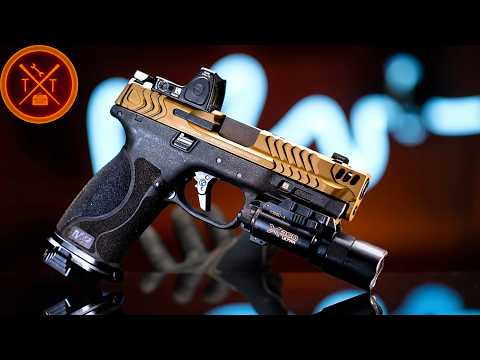
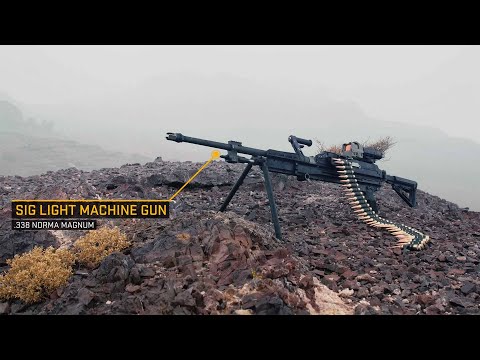
Friday Feature: Looking for a handgun? Tips on choosing what’s right for you.

Published on May 22, 2020
Duration: 3:58

This video provides essential considerations for selecting a handgun, emphasizing the importance of defining the firearm's purpose (defense, competition, concealed carry, or recreational shooting). It guides viewers through understanding different action types (hammer-fired vs. striker-fired, double-action, single-action) and stresses the critical role of proper fitment for accuracy, focusing on support hand space and trigger reach. The discussion also covers caliber choices, highlighting the cost-effectiveness of 9mm for practice, and concludes with an overview of sighting options, including night sights, fiber optics, and red dot systems.

Quick Summary

When selecting a handgun, first define its purpose (defense, competition, carry, or recreational). Consider action types (hammer vs. striker-fired), ensure proper fitment for grip and trigger reach, choose a suitable caliber like the cost-effective 9mm for practice, and evaluate sighting options such as red dots or night sights.

Chapters

  1. 00:01Introduction to Handgun Selection
  2. 00:20Determining the Purpose of Your Handgun
  3. 00:44Understanding Handgun Action Types
  4. 01:06Importance of Handgun Fitment
  5. 01:41Trigger Reach and Fitment
  6. 02:19Choosing the Right Caliber
  7. 02:39Cost-Effectiveness of 9mm
  8. 03:02Sighting Options for Handguns
  9. 03:12Red Dot Sights and Optics
  10. 03:35Conclusion and Next Steps

Frequently Asked Questions

What are the key factors to consider when choosing a handgun?

When choosing a handgun, prioritize its purpose (defense, competition, carry, or fun). Then, consider the action type (hammer-fired vs. striker-fired), ensure proper fitment for your hand size and grip, select an appropriate caliber like 9mm for cost-effectiveness, and evaluate sighting options such as night sights or red dots.

How does handgun fitment affect shooting accuracy?

Proper handgun fitment is crucial for accuracy. It ensures you can achieve a consistent grip with both hands, providing stability. Critically, it means you can reach the trigger comfortably, allowing for a smooth, straight pull without disturbing your aim, which is essential for precise shots.

What are the pros and cons of different handgun calibers?

Common calibers like 9mm, .40 S&W, and .45 ACP are all effective. 9mm is often favored for its cost-effectiveness, making it ideal for practice and recreational shooting. Larger calibers may offer more stopping power but typically come with higher ammunition costs and potentially reduced magazine capacity due to their size.

What sighting options are available for handguns?

Handgun sighting options include standard iron sights, fiber optic sights for better visibility, and night sights for low-light conditions. Pistol-mounted red dot sights are also increasingly popular, offering faster target acquisition, though they add to the overall cost of the firearm.

Related News

All News →

More Training & Techniques Videos You Might Like

More from SIG SAUER, Inc

View all →