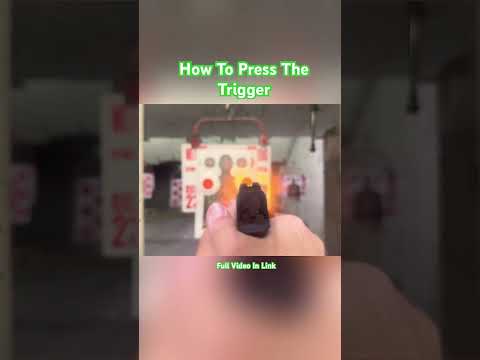
Fundamentals of Bullseye Pistol Shooting with Brian Zins: Trigger Control

Published on October 22, 2019
Duration: 5:06

This guide details trigger control techniques for bullseye pistol shooting, as demonstrated by 12-time NRA National Pistol Champion Brian Zins. It emphasizes merging trigger pull with aiming for sight stabilization and covers proper finger placement, including the 'crease technique' for 1911s, to achieve a straight rearward pull without disturbing the sights. The instruction highlights that effective trigger control is crucial for accuracy, even when addressing the concept of 'trigger jerk'.

Quick Summary

Trigger control is a core fundamental in precision pistol shooting, aimed at stabilizing the sights. Proper technique involves placing the trigger finger flat against the trigger face for a straight rearward pull, avoiding lateral pressure. For 1911s, the 'crease technique' on the trigger's edge aids this straight pull, ensuring the trigger action stabilizes, not disturbs, sight alignment.

Chapters

  1. 00:00Introduction to Trigger Control
  2. 01:00The Purpose of the Trigger
  3. 01:38Trigger Finger Placement
  4. 02:13Avoiding Lateral Movement
  5. 03:06The 1911 Crease Technique
  6. 03:31Debunking Trigger Jerk Myths
  7. 04:16Stabilizing the Front Sight

Frequently Asked Questions

What is the primary purpose of trigger control in precision pistol shooting?

According to Brian Zins, the primary purpose of trigger control in precision pistol shooting is to stabilize the sights. It's about merging the act of pulling the trigger with the process of aiming so that the trigger pull itself doesn't disturb the sight alignment with the target.

How should a shooter position their finger for optimal trigger control?

For optimal trigger control, especially in precision shooting, your finger should be placed flat against the trigger face. This ensures a straight rearward pull. Avoid placing the finger too deep or too shallow, as this can create an angle that causes lateral pressure and misaligns the sights.

What is the 'crease technique' for 1911 trigger control?

The 'crease technique' for 1911 shooters involves placing the first crease of the trigger finger on the right edge of the trigger (for right-handed shooters). This positioning helps to level the last joint of the finger, facilitating a perfect, straight rearward pull without disturbing the aim.

Is 'trigger jerk' a myth in shooting?

While elite shooters can perform very fast trigger pulls without disturbing sights, for most individuals, a 'trigger jerk' involves an uncontrolled movement that significantly misaligns the sights. Brian Zins emphasizes that the goal is a smooth pull that maintains sight alignment, not necessarily a fast one.

Related News

All News →

More Training & Techniques Videos You Might Like

More from NRApubs

View all →