Gun Owner Stops Restaurant Shooting: First Person Defender|S1 E13

Published on September 25, 2013
Duration: 14:15

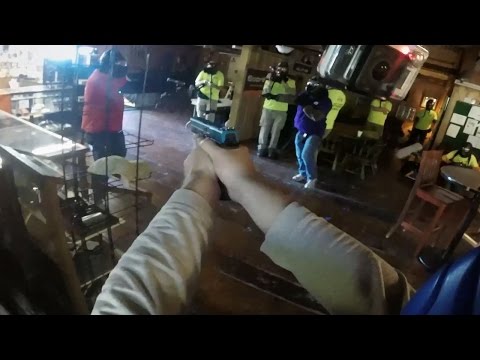
This video demonstrates the 'Vertical Track' drill, a critical self-defense technique taught by Gordon Hutchinson, a senior instructor from Louisiana. The drill focuses on how to effectively neutralize a threat when initial center-mass shots fail, emphasizing shot placement and recoil management to transition to a head shot. The scenario highlights the importance of continuous training and adaptation in high-stress situations, even for experienced individuals.

Quick Summary

The Vertical Track Drill is a critical self-defense technique demonstrated in First Person Defender, where a shooter transitions from center-mass shots to a head shot if initial impacts fail to stop a threat. This method utilizes recoil to guide the aim up the 'kill corridor' and is essential for neutralizing resilient attackers, especially when body armor is a factor.

Chapters

  1. 00:00Introduction to First Person Defender
  2. 01:34Participant Profile: Gordon Hutchinson
  3. 02:07Scenario 1: Restaurant Robbery
  4. 04:16Scenario 1 Debrief
  5. 07:11Technical Training: The Vertical Track Drill
  6. 12:15Scenario 2: Applying the Training
  7. 13:03Final Assessment

Frequently Asked Questions

What is the Vertical Track Drill in self-defense?

The Vertical Track Drill, also known as a variation of the Mozambique Drill, is a tactical technique where a shooter transitions from center-mass shots to a head shot if the initial shots fail to stop a threat, utilizing recoil to guide the aim upwards through the 'kill corridor'.

Why are center-mass shots sometimes ineffective in self-defense?

Center-mass shots may not immediately incapacitate a threat due to factors like body armor, drug-induced resilience, or the attacker's physiological response. This highlights the need for follow-up shots to more vital areas like the head.

What role does stress play in a self-defense encounter?

High stress can induce physiological responses like tunnel vision, narrowing peripheral awareness and potentially affecting a shooter's ability to acquire targets accurately. Continuous training helps mitigate these effects and build conditioned responses.

What training tools were used in the First Person Defender scenario?

The First Person Defender scenario utilized Simunition FX marking cartridges for realistic force-on-force training. This allows participants to practice defensive tactics in a safe, simulated combat environment without the risks associated with live ammunition.

Related News

All News →

More Training & Techniques Videos You Might Like

More from Gun Talk Media

View all →