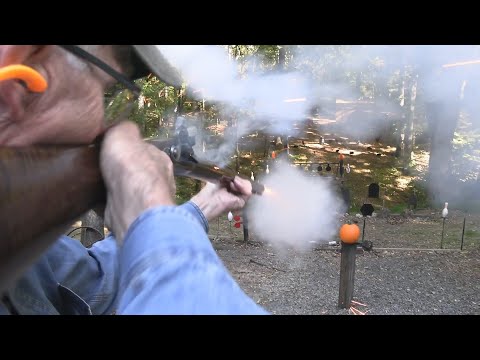
How Deadly is a Flintlock Rifle? The British hated this thing

Published on November 27, 2022
Duration: 12:55

This guide details the firing and reloading technique for a .54 caliber flintlock rifle, as demonstrated by Garand Thumb. It covers the muzzleloading process, ignition sequence, and the importance of safety when handling black powder firearms. The video emphasizes the historical significance and surprising lethality of these weapons, showcasing their performance through ballistic testing.

Quick Summary

Garand Thumb demonstrates the surprising lethality of a .54 caliber flintlock rifle, showcasing its ballistic performance on a ballistic dummy. The .54 caliber lead ball created massive wound channels comparable to modern shotgun slugs, and the rifle showed notable accuracy despite its age and ignition delay.

Chapters

  1. 00:00Introduction and Shooting Montage
  2. 00:28Historical Context of the Flintlock Rifle
  3. 01:18Sponsor Acknowledgments
  4. 02:14Ballistic Testing Setup
  5. 03:02Technical Mechanics of Flintlocks
  6. 04:08First Shot: Torso Impact
  7. 05:03Reloading and Black Powder Discussion
  8. 06:10Second Shot: Lung and Cavitation
  9. 08:39Long Range and Accuracy Testing
  10. 09:11Headshot Lethality Test
  11. 10:34Final Assessment and Conclusion

Frequently Asked Questions

How does a flintlock rifle work?

A flintlock rifle is a muzzleloader where a flint strikes a steel frizzen, creating sparks that ignite priming powder in the pan. This ignites the main powder charge in the barrel, firing a lead round ball projectile.

What was the ballistic performance of the .54 caliber flintlock rifle?

The .54 caliber flintlock demonstrated significant lethality. A torso shot lodged in the spine, while a lung shot passed through with massive cavitation. A headshot caused catastrophic damage, severing the skull.

Is a flintlock rifle accurate?

Despite its age, the rifled barrel of the flintlock rifle allowed for surprising accuracy at 50 meters. However, the 'lock time' (ignition delay) presents a challenge for precise aiming compared to modern firearms.

What are the challenges of using a flintlock rifle?

Challenges include the slow muzzleloading process, the significant smoke and residue from black powder, and the inherent 'lock time' which requires anticipating the ignition delay. Proper cleaning is also crucial.

Related News

All News →

More Training & Techniques Videos You Might Like

More from Garand Thumb

View all →