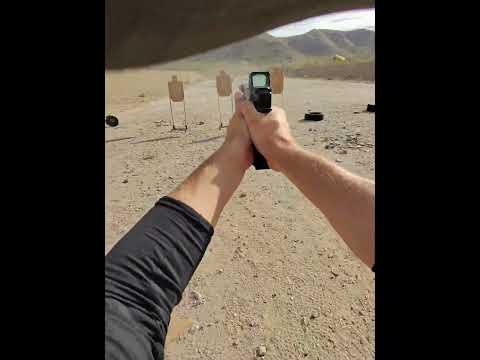
How I Zero My Red Dot On My Pistol

Published on October 21, 2017
Duration: 8:10

This video details Scott Jedlinski's practical method for zeroing a red dot sight on a pistol, emphasizing a 10-yard zero for better close-range holdovers and visibility. He advocates for offhand shooting and verifying the zero at 15 and 25 yards. The process prioritizes practical accuracy for self-defense and competition, accepting minor deviations as long as hits are consistent.

Quick Summary

Scott Jedlinski recommends zeroing a pistol red dot sight at 10 yards. This method simplifies hold-overs for close targets and involves shooting offhand at a 6-inch target until three rounds impact the bullseye. Verification at 15 and 25 yards ensures consistency.

Chapters

  1. 00:00Introduction: Why Zero Your Red Dot?
  2. 00:45The 10-Yard Zero Explained
  3. 01:37Step-by-Step Zeroing Procedure
  4. 02:57Verification at 15 & 25 Yards
  5. 04:08Close-Range Hold-Overs
  6. 04:52Precision Tips: Dot Brightness & Rest
  7. 05:56Self-Defense & Competition Standards

Frequently Asked Questions

What is the recommended distance for zeroing a pistol red dot sight?

Scott Jedlinski recommends zeroing a pistol red dot sight at 10 yards. This distance helps manage extreme hold-overs often encountered when shooting closer than 25 yards, making the zeroing process more practical.

How do you perform the 10-yard zeroing procedure for a red dot pistol?

Use a 6-inch Shoot-N-C target at 10 yards. Shoot offhand, without a rest, until three rounds consistently impact the bullseye. This ensures a reliable zero for practical shooting distances.

Should I use a rest when zeroing my red dot pistol?

No, it's advised against using a bench rest. Shooting offhand replicates natural shooting conditions better, leading to a more practical and reliable zero for self-defense and competition scenarios.

What adjustments are needed after the initial 10-yard zero?

After zeroing at 10 yards, verify the sight's alignment at 15 and 25 yards. Check for consistent elevation drop and windage, making minor adjustments as necessary to ensure accuracy at longer ranges.

Related News

All News →

More Training & Techniques Videos You Might Like

More from Modern Samurai Project

View all →