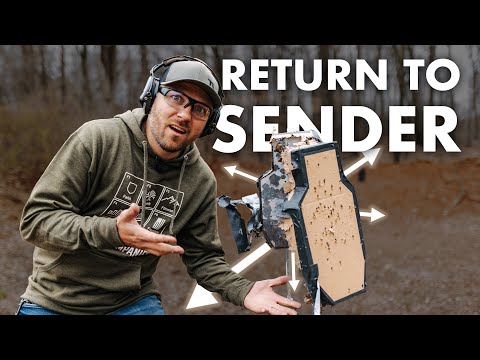
How Likely Is A Bullet Ricochet??

Published on June 29, 2021
Duration: 10:16

This video from 1ShotTV explores the likelihood and danger of bullet ricochets. The instructor demonstrates how different bullet types and impact angles affect ricochet behavior, emphasizing the importance of safe shooting distances and awareness of potential hazards. The content is presented with a focus on practical demonstration and safety considerations for firearm enthusiasts.


Quick Summary

Bullet ricochets are a real concern, with glancing ricochets being far more common than direct returns. Solid copper bullets are more prone to intact ricochets than lead bullets. Always maintain safe distances, as ricocheted rounds can retain significant velocity and lethality.

Chapters

  1. 00:00Introduction: Bullet Ricochet from Lawn Mower Blade
  2. 00:1510mm Underwood Extreme Defender Ricochet Analysis
  3. 00:33Lead Bullets vs. Solid Copper Bullets on Impact
  4. 00:42Rare 50 BMG Ricochet Example
  5. 00:57Glancing Ricochets: More Common and Dangerous
  6. 01:10Experiment Setup: Securing Steel Target for Ricochets
  7. 01:36Bullet Disintegration on Steel: Slow-Motion Test
  8. 02:11Testing Direct Ricochet into Paper Target
  9. 02:3010mm Underwood Extreme Defender Direct Ricochet Test
  10. 02:53Direct Ricochet Difficulty on Steel Targets
  11. 03:19Focusing on Glancing Ricochet Scenarios
  12. 03:37Experiment Setup: Sideways Steel Target for Glancing Ricochets
  13. 03:499mm Glancing Ricochet into Paper Target
  14. 04:019mm Glancing Ricochet Results and Analysis
  15. 04:39Repeat 9mm Glancing Ricochet Shots
  16. 05:05Potential for Trick Shots with Ricochets
  17. 05:17Review of Glancing Ricochet Hits on Paper Target
  18. 05:38Testing Ricocheted Bullet Velocity with Shaving Cream Can
  19. 06:01Successful Ricochet into Shaving Cream Can
  20. 06:36Analysis of Shaving Cream Can Penetration
  21. 07:07Testing Ricocheted Bullet Impact on Watermelon
  22. 07:24Watermelon Impact Results
  23. 07:50Multiple Watermelon Impacts from Ricochets
  24. 08:06Watermelon Destruction from Ricocheted Rounds
  25. 08:19Sandbag Backstop Impact from Ricocheted Bullets
  26. 08:35Marks on Steel Target from Watermelon Shooting
  27. 08:51Conclusion: Ricochets are a Real Concern
  28. 09:09Safety Advice: Be Aware of Ricochet Hazards
  29. 09:34Instructor's Experience and Safety Practices
  30. 09:51Final Thoughts on Ricochet Danger
  31. 09:56Call to Action: Like and Comment

Frequently Asked Questions

Are bullet ricochets common?

Glancing ricochets are much more common than direct ricochets where a bullet returns straight back. While direct ricochets are rare, especially off properly designed steel targets, glancing ricochets can happen on various surfaces and retain significant velocity.

What type of bullets are more likely to ricochet?

Solid copper bullets are more likely to remain intact and ricochet significantly compared to lead bullets, which tend to fragment and splatter upon impact with hard surfaces like steel.

How can I make my steel target less likely to cause ricochets?

Steel targets are designed to move upon impact to absorb energy and reduce ricochets. To intentionally create ricochets for testing, the target was secured with duct tape to prevent movement and angled slightly.

Are ricocheted bullets still dangerous?

Yes, ricocheted bullets can be extremely dangerous. Even after deflecting off a surface, they can retain enough velocity to penetrate targets like shaving cream cans and watermelons, indicating they can cause serious harm.

More Training & Techniques Videos You Might Like

More from 1ShotTV

View all →