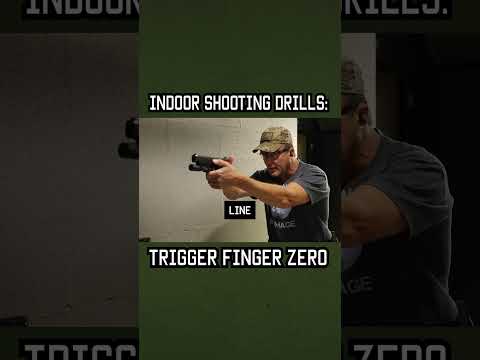
How to not move the gun when shooting

Published on January 1, 2026
Duration: 0:55

This guide details two essential trigger control techniques, 'Prep and Roll' and 'Prep and Snatch,' taught by a Tenicor instructor. The 'Prep and Roll' method involves reaching the trigger wall and applying continuous pressure until the shot breaks, while 'Prep and Snatch' involves pre-loading the trigger and then rapidly completing the pull. Live fire validation at various distances is recommended to determine the optimal technique for individual shooters and firearms, emphasizing minimal gun movement for enhanced accuracy.

Quick Summary

Learn two key trigger control techniques: 'Prep and Roll' (reach wall, continuous pressure) and 'Prep and Snatch' (pre-load to 90%, rapid pull). Validate both through live fire at various distances to determine which best minimizes gun movement and improves accuracy for your specific firearm.

Chapters

  1. 00:00Introduction: Importance of Trigger Control
  2. 00:09Technique 1: Prep and Roll Explained
  3. 00:24Technique 2: Prep and Snatch Explained
  4. 00:36Live Fire Validation and Practice

Frequently Asked Questions

What are the two main trigger control techniques discussed for minimizing gun movement?

The two primary techniques are 'Prep and Roll,' where you reach the trigger wall and apply continuous pressure until the shot breaks, and 'Prep and Snatch,' which involves pre-loading the trigger to about 90% and then rapidly pulling the remainder.

How can I determine the best trigger technique for my shooting?

The video recommends validating both 'Prep and Roll' and 'Prep and Snatch' through live fire at various distances, such as 10, 25, and 30 yards, to see which yields better precision and group sizes for your specific firearm and shooting style.

What is the key principle behind effective trigger control?

The fundamental principle is to apply smooth, consistent pressure directly to the rear of the trigger, allowing the shot to break without disturbing the firearm's aim. This often involves 'giving the gun permission to fire' rather than forcing it.

More Training & Techniques Videos You Might Like

More from Tenicor

View all →