How to use the G7 Reticle

Published on January 6, 2014
Duration: 7:16

This video details the G7 reticle's MOA subtensions and its application in range estimation. It highlights how to calculate target size and range using the reticle, but strongly cautions against relying on it for distances over 500 yards due to potential estimation errors. Laser rangefinders are recommended for greater accuracy at longer ranges.

Quick Summary

The G7 reticle uses hash marks for ranging: horizontal marks are 1 MOA, vertical are 0.5 MOA. The ranging formula is (Target Height in Inches / MOA measured) * 100 = Range in Yards. Use this as a backup under 500 yards; laser rangefinders are more reliable beyond that.

Chapters

  1. 00:00G7 Reticle Basics & MOA Explained
  2. 01:03Sizing Objects in the Field with Reticle
  3. 01:51The Ranging Formula: Target Height / MOA
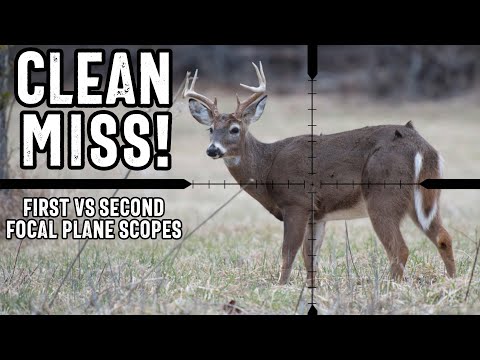
  4. 02:56Ranging Game Animals with G7 Reticle
  5. 03:58Limitations & Error Margins in Reticle Ranging
  6. 06:51Conclusion: Best Practices & Backup Use

Frequently Asked Questions

How do the G7 reticle's hash marks work?

The G7 reticle has horizontal hash marks at 1 MOA increments and vertical marks at 0.5 MOA increments. These values change with magnification because it's a Second Focal Plane scope; at 22x they are 1 MOA apart, at 11x they are 2 MOA, and at 5.5x they are 4 MOA.

What is the formula for ranging using a reticle?

The formula for ranging is: (Target Height in Inches / MOA measured) * 100 = Range in Yards. This allows you to estimate distance if you know the target's size and measure its width or height in MOA within your scope.

When should I use reticle ranging versus a laser rangefinder?

Reticle ranging is best used as a backup method for distances under 500 yards. Beyond that, potential estimation errors in target size and reticle resolution make it unreliable compared to the accuracy of a laser rangefinder.

How accurate is reticle ranging for hunting?

Reticle ranging can be accurate for closer shots, but estimation errors are a significant risk. A small error in judging an animal's size can lead to a large yardage error, potentially resulting in an unethical shot beyond effective range.

More Training & Techniques Videos You Might Like

More from Gunwerks

View all →