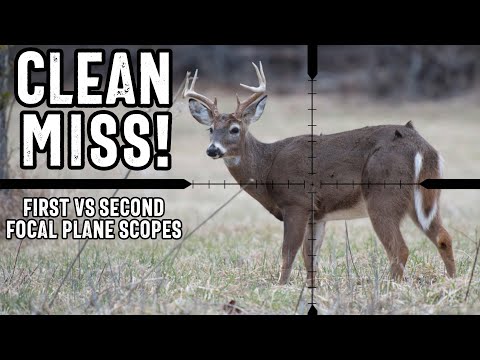
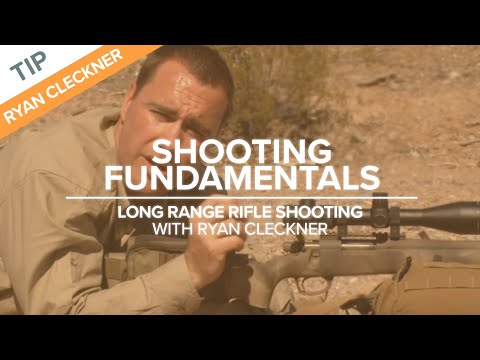
First Focal Plane vs. Second Focal Plane with Ryan Cleckner: Which Scope is Right for You?

This video provides an expert-level comparison of First Focal Plane (FFP) and Second Focal Plane (SFP) rifle scopes, presented by Ryan Cleckner of Gun University. It details how reticle size changes with magnification in each type and offers practical advice for choosing between them based on shooting applications like hunting versus precision target shooting. The explanation highlights the advantages of FFP for accurate reticle measurements at all magnifications, while SFP offers cost benefits and better low-light visibility for hunting.


Quick Summary

First Focal Plane (FFP) scopes scale their reticle proportionally with the target image as magnification changes, ensuring accurate measurements at all zoom levels. Second Focal Plane (SFP) scopes keep the reticle size constant, making it visible at low power but only accurate for measurements at a specific magnification. FFP is best for precision shooting, while SFP is often preferred for hunting due to cost and reticle visibility at low power.

Chapters

  1. 00:00Introduction to Focal Planes
  2. 00:20Defining FFP & SFP
  3. 00:49Second Focal Plane (SFP) Explanation
  4. 01:09First Focal Plane (FFP) Explanation
  5. 01:35FFP Advantage: Reticle Accuracy
  6. 02:24SFP Benefits: Cost and Hunting
  7. 03:19Choosing the Right Scope

Frequently Asked Questions

What is the main difference between First Focal Plane (FFP) and Second Focal Plane (SFP) rifle scopes?

The primary difference lies in where the reticle is placed relative to the magnification lens. In FFP scopes, the reticle scales with the image as you zoom, keeping measurements consistent. In SFP scopes, the reticle stays the same size, meaning its measurements are only accurate at a specific magnification, usually the highest setting.

When is a Second Focal Plane (SFP) scope a better choice than a First Focal Plane (FFP) scope?

SFP scopes are often preferred for hunting or low-light situations because their reticle remains a visible size even at low magnifications. They are also generally less expensive, making them a practical choice when precise reticle measurements at all zoom levels aren't critical.

Why are First Focal Plane (FFP) scopes advantageous for target shooting?

FFP scopes are ideal for precision target shooting because the reticle scales with the target image across all magnification settings. This ensures that any measurements, windage holds, or elevation adjustments made using the reticle are accurate regardless of the zoom level.

Can mil-dot reticles be used for ranging in both FFP and SFP scopes?

Yes, but with a crucial distinction. Mil-dot reticles in FFP scopes can be used for ranging and holdovers at any magnification. In SFP scopes, mil-dot reticle measurements are only accurate at the scope's maximum magnification setting.

More Tactical & Gear Videos You Might Like

More from NSSF—The Firearm Industry Trade Association

View all →