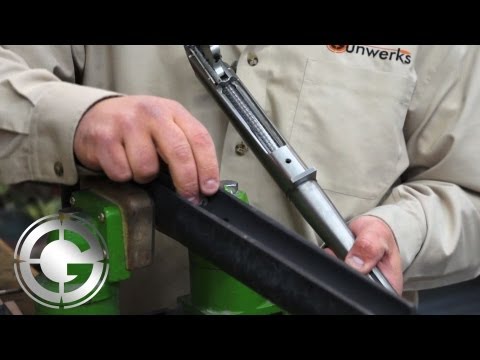
How to Zero a BDC Scope Turret

Published on March 26, 2012
Duration: 2:06

This video details the process of zeroing a Bullet Drop Compensation (BDC) scope turret, emphasizing precision for long-range shooting. It covers establishing a 100-yard zero, calculating necessary adjustments based on group impact, and resetting the turret cap to the zero mark. The zero is then verified by dialing the turret for a significantly longer distance, such as 950 yards, and successfully engaging the target.

Quick Summary

To zero a BDC scope turret, first establish a 100-yard zero by shooting a group and measuring its center. Calculate adjustments in M.O.A. based on the deviation. Reset the turret cap to zero by loosening set screws, rotating the cap, and re-tightening. Finally, verify the zero by dialing for a long-range distance and engaging a target.

Chapters

  1. 00:00Introduction to BDC Scope Zeroing
  2. 00:12Establishing a 100-Yard Zero
  3. 00:35Calculating Scope Adjustments
  4. 01:12Resetting the Turret Cap to Zero
  5. 01:43Long-Range Zero Verification

Frequently Asked Questions

What is the first step in zeroing a BDC scope turret?

The initial step is to establish a 100-yard zero. This involves shooting a three-shot group at 100 yards and accurately measuring the center of that group relative to the target's center.

How do you adjust a BDC scope turret after shooting?

After determining the group's deviation (e.g., 1 M.O.A. low), you adjust the scope's turret accordingly. The turret is then reset by loosening set screws, rotating the cap to the zero mark, and re-tightening.

What is the purpose of resetting the turret cap?

Resetting the turret cap to the zero mark after zeroing allows the shooter to easily track their adjustments. It provides a visual reference point without changing the internal scope settings that were calibrated.

How is a BDC scope zero verified for long range?

Verification involves dialing the BDC turret to a specific long-range distance, such as 950 yards, and then successfully engaging a target at that distance, confirming the accuracy of the zero and adjustments.

Related News

All News →

More Training & Techniques Videos You Might Like

More from Gunwerks

View all →