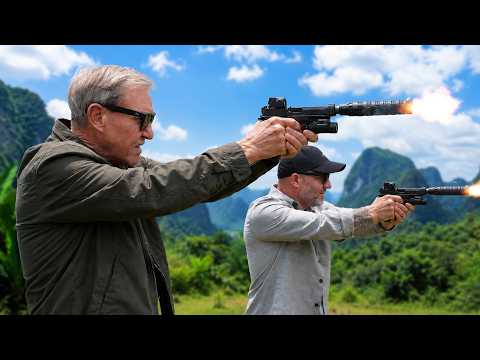
Not Staring at the Sights Isn’t Easy

Published on March 12, 2026
Duration: 11:31

Instruction from expert firearms instructor Joel Park clarifies the nuances of target transitions and sight acquisition. He emphasizes that eyes should always lead the gun, explaining how exaggerated movements in demonstrations differ from real-world application. Park addresses common errors like focusing on the sight too early and provides practical examples for pistol draws, wide transitions, and rapid fire, highlighting the importance of maintaining target focus.

Quick Summary

Expert firearms instructor Joel Park explains that eyes should always lead the gun during target transitions. While demonstrations may exaggerate movements, in real shooting, your eyes acquire the next target first, and the gun follows. Common mistakes include focusing on the sight too early, disrupting this natural process.

Chapters

  1. 00:00Viewer Question: Eye-Hand Sync
  2. 00:30Demos vs. Real-World Shooting
  3. 01:45Eyes Always Lead the Gun
  4. 02:18Transition Distance Impact
  5. 03:33Common Sight Acquisition Issues
  6. 03:55Pistol Draw Example
  7. 04:35Wide Transition Example
  8. 05:07Rapid Fire Example
  9. 05:32Summary of Sight Problems
  10. 06:44Perception vs. Reality
  11. 07:03Indoor Range Training Views
  12. 08:11Benefits of Indoor Range Training
  13. 09:20Maximizing Indoor Range Training
  14. 11:18Conclusion & Call to Action

Frequently Asked Questions

What is the correct eye movement during a pistol draw?

During a pistol draw, your eyes should first focus on the target. As the pistol rises, briefly shift your vision to acquire the red dot sight, using it to guide the firearm the final distance to the target.

How should I approach wide target transitions when shooting?

For wide target transitions, avoid fixating on the sight throughout the movement. Instead, snap your eyes directly to the next target, allowing the pistol to naturally follow your gaze.

Is it ever okay for my eyes and gun sight to arrive at the target simultaneously?

While it might feel simultaneous, especially in narrow transitions, your eyes should ideally lead the gun. The timing difference varies with distance and situation, but a conscious eye lead is crucial for accuracy.

What are common mistakes in sight acquisition?

A common mistake is focusing on the sight too early during the draw, transitions, or recoil recovery. This disrupts the natural process of leading with your eyes to the target.

More Training & Techniques Videos You Might Like

More from Joel Park

View all →