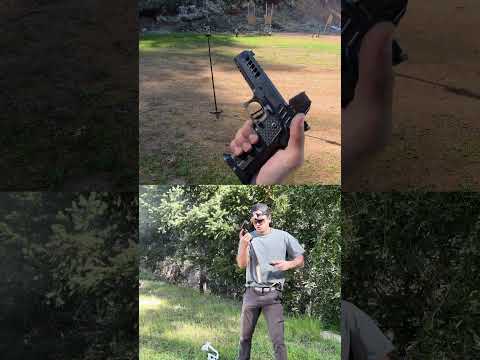
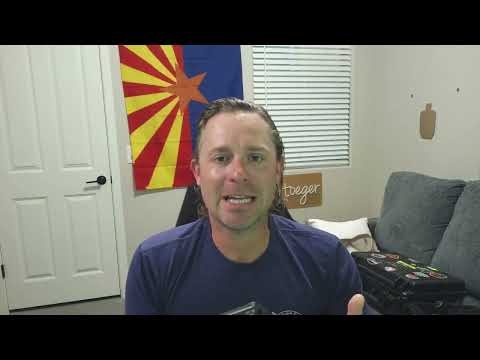
Occluded Gun Sight - Extremely Fast & Easy Technique [Range Talk]

Published on April 3, 2025
Duration: 9:10

This video demonstrates the technique of occluded optic shooting, also known as shooting with both eyes open, using a firearm's optic. The method involves closing one eye while looking through the optic with the other, allowing the brain to superimpose the reticle onto the target seen by the open non-dominant eye. This technique, historically used with devices like the Armson OEG, is presented as a viable training tool and an emergency method for engaging targets quickly without a fully functional optic, while also offering the option to open the lens cover for better optical clarity on longer shots.

Quick Summary

Occluded optic shooting is a technique where you look through your firearm's optic with one eye while keeping the other eye open. Your brain then superimposes the reticle from the optic onto the target seen by your open eye, allowing for rapid target acquisition and engagement, even with a covered optic.

Frequently Asked Questions

What is occluded optic shooting?

Occluded optic shooting is a technique where you look through your firearm's optic with one eye while keeping the other eye open. Your brain then superimposes the reticle from the optic onto the target seen by your open eye, allowing for rapid target acquisition and engagement.

How does occluded optic shooting work with a covered optic?

When the front lens of your optic is covered, occluded optic shooting relies on your non-dominant eye to see the target. Your dominant eye, looking through the optic, sees the reticle, and your brain merges these two images, effectively placing the reticle on the target.

What are the benefits of using a solid front lens cover on an optic?

A solid front lens cover protects the optic from debris and liquid, and it can also act as a rudimentary kill flash by reducing glare and reflections, preventing unwanted light signatures.

Can this technique be used with LPVOs?

Yes, occluded optic shooting can be used with Low Power Variable Optics (LPVOs) that have an illuminated reticle. Even dim illumination is often visible when shooting occluded, especially when the front is blacked out.

Related News

All News →

More Training & Techniques Videos You Might Like

More from 9-Hole Reviews

View all →