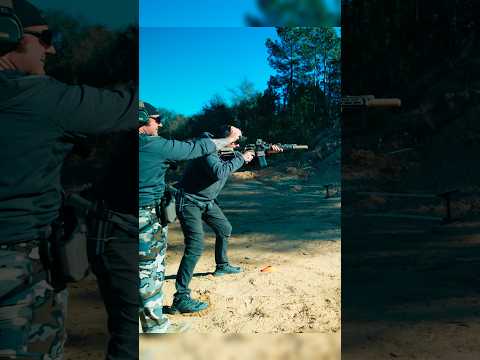
Quick Tip: 36yd Zero for the AR 15

Published on June 23, 2025
Duration: 14:20

This video explains the benefits of a 36-yard zero for the AR-15, highlighting its ability to keep impacts tightly stacked from 25 to 250 yards, making it ideal for competition and unknown distance shooting. It details the process of achieving this zero, including bore sighting, initial group firing, MOA calculations at 36 yards, and refining the zero. The discussion also touches on how ammunition and barrel length can affect zero, recommending the Applied Ballistics app for precise calculations.

Quick Summary

A 36-yard zero for an AR-15 is beneficial because it keeps bullet impacts tightly stacked from 25 to 250 yards, ideal for competition and unknown distance shooting. At 36 yards, 1 MOA equals about 0.3769 inches, which is used for calculating scope adjustments after measuring group offsets.

Chapters

  1. 00:00Intro to 36-Yard Zero
  2. 01:08Trajectory Comparison: 25 vs 36 Yards
  3. 03:15Ammo & Barrel Impact on Zero
  4. 04:31Bore Sighting Your AR-15
  5. 05:51First Zeroing Group
  6. 08:07MOA Calculations at 36 Yards
  7. 09:34Refining the Zero
  8. 11:16Final Adjustments & Conclusion

Frequently Asked Questions

What is the main benefit of using a 36-yard zero for an AR-15?

The primary advantage of a 36-yard zero for an AR-15 is its trajectory management. It allows your bullet's impact point to remain very close to your point of aim from approximately 25 yards out to 250 yards, making it highly effective for competition and unknown distance shooting scenarios.

How do you calculate MOA adjustments for a 36-yard zero?

To calculate MOA adjustments at 36 yards, you need to know that 1 MOA equals approximately 0.3769 inches at this distance. After firing a group, measure the distance your impacts are off from the center of your aim point and convert that measurement into MOA clicks for your scope.

What factors can affect the 36-yard zero on an AR-15?

Several factors can influence your 36-yard zero, including the type of ammunition used (e.g., M855 62gr vs. Hornady 75gr) and the barrel length of your rifle (e.g., 10.5" vs. 20"). It's recommended to use ballistics software like the Applied Ballistics app for precise calculations.

Why is bore sighting important before zeroing a rifle?

Bore sighting is crucial because it ensures your initial shots land on the target, saving ammunition and time. By aligning your optic with the bore of the rifle before live fire, you establish a rough zero, making the process of fine-tuning your aim much more efficient.

Related News

All News →

More Training & Techniques Videos You Might Like

More from Brownells, Inc.

View all →