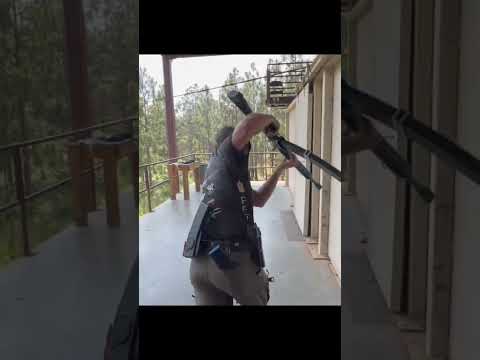
Rifle Homework - Prepping for the 2024 IPSC Rifle World Shoot

Published on March 5, 2024
Duration: 7:15

This video details a crucial training drill for competitive rifle shooters preparing for events like the IPSC Rifle World Shoot. The instructor demonstrates how to determine the mechanical offset of lighter ammunition (55-grain) relative to a rifle zeroed for heavier, long-range rounds (75-grain). By shooting groups at various distances, shooters can establish precise holdovers and holdunders, ensuring accuracy on tight no-shoot targets and optimizing ammunition choice for different stages of competition.

Quick Summary

To prepare for competitions like the IPSC Rifle World Shoot, determine your rifle's mechanical offset by zeroing with heavy ammunition (e.g., 75-grain) and then testing lighter rounds (e.g., 55-grain) at various distances. This allows you to establish precise holdovers and holdunders for cost-effective accuracy on tight no-shoot targets.

Chapters

  1. 00:00Introduction & Competition Prep
  2. 00:12Ammunition Selection: 75gr vs 55gr
  3. 00:50Determining Mechanical Offset
  4. 01:00Target Setup for Offset Testing
  5. 01:24Optic Mount Considerations
  6. 01:58Offset Test Firing Sequence
  7. 02:50Analyzing Offset Results (10-100 Yards)
  8. 03:54No-Shoot Target Drills
  9. 04:04Setting Up No-Shoot Targets
  10. 04:27Cold Run with No-Shoot Targets
  11. 05:12Evaluating No-Shoot Drill Performance
  12. 05:30Target Analysis & Hit Assessment
  13. 06:06Importance of Ammo Offset Homework
  14. 06:23Adapting Drill to Range Limitations
  15. 06:49Final Thoughts & Community Plug

Frequently Asked Questions

What is mechanical offset in rifle shooting?

Mechanical offset refers to the difference in distance between your rifle's line of sight (through the optic) and its bore axis. This offset changes with distance and is crucial when using different ammunition types or after adjusting your zero.

Why is it important to test lighter ammunition for competition?

Testing lighter ammunition (like 55-grain) is important because it's often more affordable for practice and closer-range stages. Understanding its trajectory relative to your zero ensures you can accurately hit targets, especially tight no-shoots, without overspending on heavy match ammo.

How does ammunition weight affect rifle zero?

Heavier ammunition (e.g., 75-grain) typically has a flatter trajectory at longer distances compared to lighter ammunition (e.g., 55-grain). This means a rifle zeroed for 75-grain will likely shoot higher with 55-grain ammo at closer ranges and potentially lower at very long ranges.

What is the purpose of the mechanical offset drill shown?

The drill aims to quantify the ballistic difference between two ammunition types. By shooting groups at known distances with lighter ammo after zeroing with heavier ammo, shooters can precisely determine holdovers or holdunders needed for accuracy.

Related News

All News →

More Training & Techniques Videos You Might Like

More from Farewell Firearms Training

View all →