Setting up a Church Security Team; Good Guy with a Gun: Gun Talk Radio| 11.12.17 B

Published on November 13, 2017
Duration: 44:23

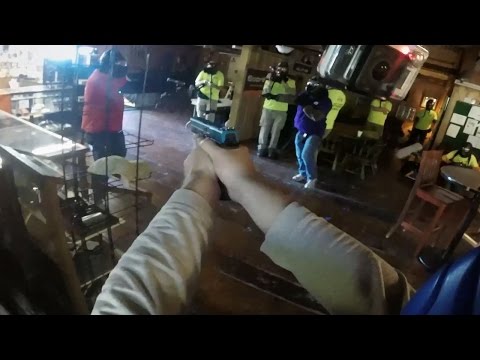
This video emphasizes proactive church security through a 'Report, Remove, React' strategy, moving beyond 'Run, Hide, Fight'. It highlights the importance of trained personnel, team coordination, and consistent firearms practice, advocating for a professional-level standard. Pastor Mark Neely, with 28 years in law enforcement and SWAT, stresses that church security teams don't need to be former military but must be rigorously trained and practice regularly.

Quick Summary

Effective church security utilizes a 'Report, Remove, React' strategy, emphasizing proactive observation and safe congregation removal before trained personnel respond. Pastor Mark Neely, a former SWAT officer, stresses the need for professional-level firearms training and consistent practice for security teams, highlighting that coordinated team efforts are far more effective than individual actions.

Chapters

  1. 00:00Introduction to Laser Sights
  2. 00:24Gun Talk Radio Intro
  3. 01:45Caller Discusses Texas Church Shooter Training
  4. 03:10Guest Introduction: Pastor Mark Neely
  5. 04:44Pastor Neely's Background and Perspective
  6. 05:47Analysis of Church Shootings and Armed Citizens
  7. 06:44The 3 R's: Report, Remove, React
  8. 08:01Responding with Trained Personnel
  9. 09:33Training for Church Security Teams
  10. 10:073-Gun Shooters and Preparedness
  11. 10:37Pastor's Responsibility for Flock Safety
  12. 11:45Biblical Justification for Self-Defense
  13. 12:13Importance of Team Training
  14. 13:06Re-examining 'Run, Hide, Fight'
  15. 13:20SWAT Team Training Principles
  16. 14:04Springfield Armory Double Stack Pistols
  17. 14:37Concealed Carry Training DVDs
  18. 15:05Black Hills Ammunition
  19. 15:43Conservation Efforts
  20. 16:13Ruger LCP 2
  21. 16:51Call-in Number Reminder
  22. 17:00Caller Story: Alaska Close Call
  23. 18:03Church Security Training Resources
  24. 18:46The Failure Drill Explained
  25. 19:33Origin of the Failure Drill
  26. 20:10Practicing the Failure Drill
  27. 21:36Alternative Shot Placement
  28. 22:13Importance of Professional Training
  29. 22:43Support Local Businesses
  30. 23:07Call-in Number Reminder
  31. 23:16Caller: Right 12 Shotgun
  32. 25:10Caller: Louisiana Police Officer Incident
  33. 25:51Brian Suits on Armed Citizens
  34. 26:34Mass Shootings as 'Suicides'
  35. 27:21Media's Role in Mass Shootings
  36. 30:15DoubleTap Cold Defense Ammunition
  37. 30:29Ducks Unlimited Conservation
  38. 31:31WhereToShoot.org
  39. 31:59Crimson Trace Laser Sights
  40. 32:30Brownells.com
  41. 32:53DoubleTap Ammunition
  42. 33:24Boston Globe Gun Confiscation Call
  43. 34:58Caller: Second Amendment vs. First Amendment
  44. 37:18Caller: Changes in Societal Attitudes Towards Guns
  45. 39:26Call-in Number Reminder
  46. 39:45Boston Globe and Gun Confiscation
  47. 39:59Senator Chris Murphy and Dianne Feinstein
  48. 40:36Assault Weapons Ban Study Results
  49. 41:16Caller Follow-up: HK VP9 Issue
  50. 43:53Upcoming Author Interview

Frequently Asked Questions

What is the 'Report, Remove, React' strategy for church security?

The 'Report, Remove, React' (3 R's) strategy for church security involves having trained personnel observe and report potential threats, safely removing the congregation from harm's way, and then having trained individuals respond to neutralize the threat. This proactive approach aims to prevent incidents before they escalate.

Why is professional-level firearms training important for church security teams?

Professional-level firearms training, including regular practice and meeting police qualification standards, is crucial for church security teams because the average concealed carry permit holder may not possess the necessary skills to effectively engage a threat under extreme stress. Trained personnel are more likely to hit their targets and de-escalate situations safely.

How does team training benefit church security?

Team training for church security is vital because it fosters coordinated action, similar to law enforcement SWAT teams. Two trained individuals working together are significantly more effective than one acting alone, improving communication, mutual support, and overall response capability during an active threat scenario.

What is the 'failure drill' and why is it important?

The 'failure drill,' also known as the Mozambique drill, involves two shots to the center mass and one to the head. It's critical for ensuring threat neutralization, especially against individuals potentially under the influence of drugs or wearing body armor, as it addresses potential ineffectiveness of body shots.

Related News

All News →

More Training & Techniques Videos You Might Like

More from Gun Talk Media

View all →