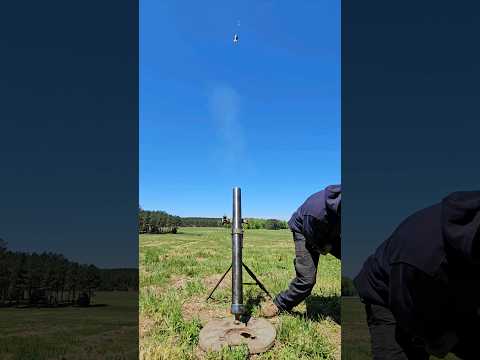
The ๐ŸŒŽ's Biggest 50cal Ever! Live Fire 106mm Subcal Second Angle #ww2 #history #military #army

Published on January 23, 2025
Duration: 0:33

This guide details the live-fire procedure for the M40 106mm Recoilless Rifle using a .50 caliber subcaliber device, as demonstrated by an expert operator. It covers loading, firing, and reloading steps, emphasizing safe weapon handling and operational knowledge of historical ordnance.


Quick Summary

The M40 106mm Recoilless Rifle can be fired using a .50 caliber subcaliber device for training and observation. This involves loading the smaller round, firing, manually ejecting the casing, and chambering another round, all while adhering to strict safety protocols demonstrated by an expert operator.

Chapters

  1. 00:00Loading Subcaliber Round
  2. 00:09First Shot & Muzzle Blast
  3. 00:14Ejection and Reloading
  4. 00:24Second Shot Command

Frequently Asked Questions

How is the M40 106mm Recoilless Rifle fired using a subcaliber device?

The M40 106mm Recoilless Rifle is fired using a .50 caliber subcaliber device by loading the smaller round into the breech. The operator then discharges the weapon, observing the reduced recoil and muzzle blast compared to the main 106mm projectile.

What is the purpose of the .50 caliber subcaliber device on the M40 106mm Recoilless Rifle?

The .50 caliber subcaliber device, often an M8C spotting rifle, is primarily used for training and observation. It allows operators to practice firing procedures and observe target impacts with significantly less recoil and cost than firing the main 106mm rounds.

What are the key steps in firing the M40 106mm with a subcaliber round?

Key steps include loading the .50 caliber round into the breech, firing the weapon, manually ejecting the spent casing, chambering a new .50 caliber round, and then discharging the second round after appropriate commands.

Who is demonstrating the operation of the M40 106mm Recoilless Rifle?

The demonstration is conducted by an expert collector/operator, indicated by their professional and instructional tone, proper use of range commands, and knowledge of historical ordnance operation and safe handling of heavy weapon systems.

Related News

All News โ†’

More Training & Techniques Videos You Might Like

More from Ordnance

View all โ†’