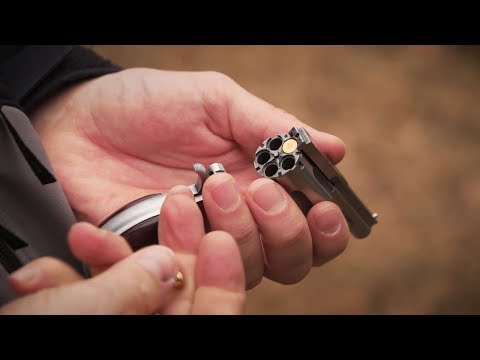
Thoughts on Twist Rates For 5.56 / .223 | Guns & Gear Bonus Tip

Published on December 29, 2023
Duration: 2:32

Jeff from Black Hills Ammunition explains the critical relationship between rifle twist rates and bullet weights for 5.56/.223 caliber firearms. Understanding your specific barrel's twist rate is essential to avoid poor accuracy or even bullet failure in flight, especially when using heavier bullets in older firearms or lighter bullets in faster twist barrels.


Quick Summary

Rifle twist rates significantly impact bullet stability in 5.56/.223 firearms. Older barrels (1:10, 1:12) are best with bullets up to 60 grains. Newer 1:7 twist barrels stabilize heavier bullets (like 77 grains) but can cause light bullets to disintegrate in flight.

Chapters

  1. 00:06Introduction to Twist Rate Compatibility
  2. 00:135.56 vs .223 Chambering Basics
  3. 00:33Historical Twist Rates (Pre-1985)
  4. 00:54Military Shift to 1:7 Twist (Post-1985)
  5. 01:04Mark 262 Ammunition Example
  6. 01:14Consequences of Mismatched Twist and Bullet Weight
  7. 01:32Summary: Older vs. Newer Rifles
  8. 01:51Risks of Lightweight Bullets in Fast Twists
  9. 02:06Final Tips on Bullet Compatibility

Frequently Asked Questions

What is the difference in twist rates for older and newer 5.56/.223 rifles?

Historically, pre-1985 .223/5.56 barrels typically featured a 1 in 10 or 1 in 12 twist rate, suitable for bullets up to 60 grains. Post-1985, the military standardized on a 1 in 7 twist rate, which is designed to stabilize longer, heavier bullets.

Can I shoot heavy bullets like 77 grains in an older rifle with a 1 in 12 twist rate?

No, it's not recommended. An older rifle with a slow twist rate like 1 in 12 lacks the necessary rifling speed to stabilize heavy bullets such as 77 grains. This mismatch can lead to poor accuracy, potentially making it difficult to keep shots on target.

What happens if I shoot very light bullets in a rifle with a fast twist rate?

Firing very lightweight bullets (e.g., 36-40 grains) in a rifle with a fast twist rate (like 1 in 7) can cause the bullets to spin excessively. This over-stabilization can lead to the bullet coming apart in flight, especially as the barrel heats up, resulting in poor accuracy.

What is the advantage of the 1 in 7 twist rate in 5.56 rifles?

The 1 in 7 twist rate, adopted by the military starting in 1985, allows for the effective stabilization of longer and heavier bullets. This capability is crucial for modern ammunition designs, such as the 77-grain bullet used in Mark 262 ammunition, which is designed for extended range accuracy.

Related News

All News →

More Training & Techniques Videos You Might Like

More from Gun Talk Media

View all →