TRAVIS HALEY D5 WORKOUT FROM NRA SHARP

Published on January 30, 2015
Duration: 14:14

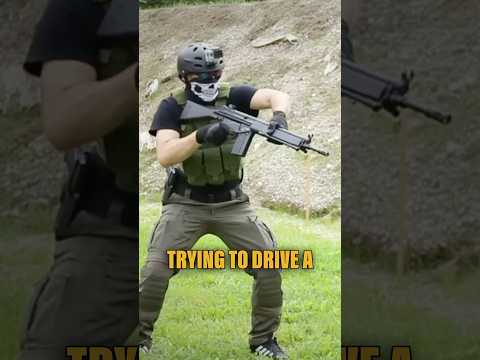
Travis Haley's D5 Workout focuses on improving body mechanics for subconscious efficiency in shooting. Key exercises include stable kneeling with separated points of contact, rapid prone transitions using the 'law of least effort,' safe supine recovery, and side-prone biomechanics for recoil management. The workout also integrates situational awareness drills, emphasizing maintaining focus on threats while moving.

Quick Summary

Travis Haley's D5 Workout enhances shooting efficiency through improved body mechanics. Key drills focus on stable kneeling, rapid prone transitions using the 'law of least effort,' safe supine recovery, and side-prone recoil management, all aimed at subconscious performance.

Chapters

  1. 00:00Intro: Body Mechanics Importance
  2. 00:52Episode 1: Stable Kneeling
  3. 03:30Episode 2: Efficient Prone Transitions
  4. 06:01Episode 3: Supine Recovery
  5. 09:28Episode 4: Side Prone Biomechanics
  6. 12:27Episode 5: Situational Awareness Drills

Frequently Asked Questions

What is the main goal of Travis Haley's D5 Workout?

The D5 Workout focuses on improving body mechanics to achieve subconscious efficiency on the shooting range. It emphasizes moving faster and more effectively in various positions like kneeling, prone, and supine, which translates to better performance under pressure.

How does the D5 Workout improve kneeling stability?

It teaches stable kneeling by separating points of contact (toes, knee, foot) to create a 'gliding rail.' This allows for smoother movement behind cover without introducing torque or tension into the body.

What technique does Travis Haley recommend for entering the prone position?

Haley advocates for the 'law of least effort' and a 'hand-squat' technique to kick the legs back quickly and efficiently into the prone position, avoiding unnecessary strain.

How can one practice recoil management from the prone position according to the D5 Workout?

The workout suggests rolling to the side with feet flat on the ground. This method helps translate recoil energy through the body rather than directly back to the muzzle, improving control.

More Training & Techniques Videos You Might Like

More from Haley Strategic Partners

View all →