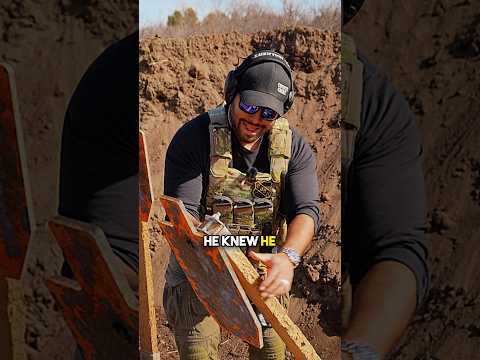
Where does bullet fragmentation go?

Published on April 16, 2025
Duration: 1:09

This video demonstrates bullet fragmentation when impacting steel targets, explaining that fragmentation follows the plane of impact. The instructor highlights that most fragmentation travels downwards, with a maximum deflection angle of 10-12 degrees on a smooth, quality steel plate. This understanding is crucial for shooter safety, differentiating between minor upward fragments and dangerous ricochets.

Quick Summary

When bullets impact a flat steel target, fragmentation follows the plane of impact, with approximately 90-95% directed downwards. On quality steel, the maximum deflection angle for fragmentation is about 10-12 degrees. This understanding is key for shooter safety, distinguishing minor fragments from dangerous ricochets.

Chapters

  1. 00:00Introduction: Bullet Impact on Steel
  2. 00:11Observation: No Front Plate Damage
  3. 00:16Fragmentation Exiting the Target
  4. 00:20Downward Fragmentation Dominance
  5. 00:26Danger of Ricochets vs. Fragmentation
  6. 00:37Law of Fragmentation: Following the Plane
  7. 00:50Quantifying Downward Fragmentation
  8. 00:55Residual Fragmentation on Vertical Plane
  9. 00:58Maximum Deflection Angle Explained
  10. 01:03Importance of Quality Steel

Frequently Asked Questions

What happens to bullet fragments when they hit a steel target?

When bullets impact a flat steel target, fragmentation generally follows the plane of the object being struck. Most of the fragmentation, around 90-95%, is directed downwards towards the ground. Minor upward fragments are typically not a danger to the shooter.

What is the maximum deflection angle for bullet fragmentation on steel?

On a smooth, quality steel target plate, the maximum deflection angle for bullet fragmentation is approximately 10 to 12 degrees. This means fragments will deviate from a direct ricochet path within this range.

Is bullet fragmentation from steel targets dangerous to shooters?

Minor bullet fragmentation that follows the plane of impact, especially directed downwards, is generally not a danger. The primary danger to a shooter from steel targets comes from large chunks or bullets themselves ricocheting directly back.

Does the type of ammunition affect fragmentation on steel targets?

While this video specifically tests 115 grain 9mm, the principles of fragmentation following the plane of impact and downward deflection apply broadly. Different bullet constructions and calibers may produce varying amounts and sizes of fragmentation.

Related News

All News →

More Training & Techniques Videos You Might Like

More from TA Targets

View all →