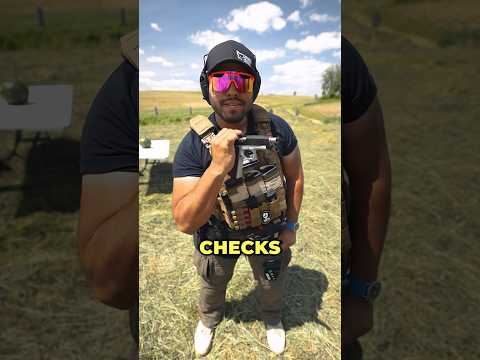
Why Are Mags Curved? Here’s Why

Published on January 16, 2025
Duration: 0:43

This guide explains the physics behind curved firearm magazines, as demonstrated by Johnny Q. The slight taper of cartridges like the .223 Remington causes them to naturally stack in a curve. Magazines are designed to match this curve, ensuring reliable feeding of ammunition into the firearm. The video features practical demonstrations and mentions specific gear like Magpul PMAGs.

Quick Summary

Firearm magazines are curved to accommodate the natural stacking geometry of tapered cartridges like .223 Remington and 5.56 NATO. This design ensures reliable feeding by preventing the rounds from binding against the magazine walls as they are pushed towards the chamber.

Chapters

  1. 00:00Introduction: The Curved Mag Question
  2. 00:09Demonstration: Cartridge Alignment
  3. 00:22Explanation: The Physics of the Curve

Frequently Asked Questions

Why are most firearm magazines curved instead of straight?

Most firearm magazines are curved because the cartridges they hold, like .223 Remington or 5.56 NATO, have a slight taper. When stacked, these tapered cartridges naturally form a curve, and the magazine is designed to accommodate this shape for reliable feeding.

What is the purpose of the curve in a firearm magazine?

The curve in a firearm magazine is designed to match the natural stacking geometry of tapered cartridges. This ensures that each round feeds smoothly from the magazine into the firearm's chamber, preventing jams and malfunctions.

What calibers are typically associated with curved magazines?

Curved magazines are commonly used for rifle cartridges with a noticeable taper, such as .223 Remington and 5.56 NATO, which are standard for AR-15 platforms. Pistol cartridges can also have tapers, leading to curved pistol magazines.

How does cartridge taper affect magazine design?

The taper of a cartridge dictates how it stacks. Tapered cartridges naturally form a curve when stacked, requiring magazines to have a corresponding curve to guide them efficiently towards the feed ramp and prevent binding.

Related News

All News →

More Training & Techniques Videos You Might Like

More from Johnny Q

View all →