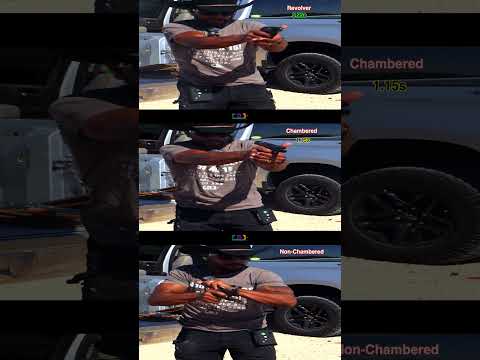
Why I Switched to the 92: I'm Splitting Hairs Here

Published on March 10, 2026
Duration: 1:34

This video from Regular Guy Training LLC features an expert instructor discussing the nuances of firearm reliability, particularly comparing Glock models to the Beretta 92. The instructor, with extensive experience shooting thousands of rounds through Glocks, emphasizes that while Glock has an edge in reliability under adverse conditions due to fewer moving parts, the comparison is often "splitting hairs" for critical defense, teaching, and match applications. The discussion highlights the importance of understanding stoppage frequency and clearance times for effective training.

Quick Summary

Glock firearms often demonstrate superior reliability, particularly their magazines, when subjected to adverse conditions like neglect, abuse, mud, or dust. This advantage stems from their design with fewer moving parts, promoting faster slide cycling and reducing the likelihood of malfunctions, making them a preferred choice for demanding applications.

Chapters

  1. 00:00Glock Reliability Advantage
  2. 00:18High Volume Glock Experience
  3. 00:34Splitting Hairs in Comparison
  4. 00:59Stoppage Clearance and Training

Frequently Asked Questions

What makes Glock firearms generally considered more reliable than some other models like the Beretta 92?

Glock pistols often exhibit superior reliability, especially their magazines, when exposed to neglect, abuse, mud, or dust. This is largely attributed to their design featuring fewer moving components, which contributes to a faster slide cycle and a lower probability of experiencing stoppages during operation.

How does high-volume shooting experience influence firearm comparisons?

Shooting thousands of rounds, including various ammunition types and through different firearm models, provides an expert perspective on reliability, durability, and performance nuances. This extensive experience allows for informed comparisons, like the one made between Glock and the Beretta 92, highlighting subtle but critical differences in stoppage frequency and clearance.

Why is understanding stoppage frequency important for firearm training?

Understanding the expected rate of stoppages per thousand rounds with training ammunition is crucial for effective practice. It allows shooters to anticipate potential malfunctions, develop faster and more instinctive stoppage clearance techniques, and ultimately improve their overall proficiency and reaction time under pressure.

What does 'splitting hairs' mean in the context of comparing firearms like the Glock and Beretta 92?

'Splitting hairs' implies that the differences between the firearms being compared are very minor and often only noticeable to highly experienced users or under specific, demanding conditions. While the speaker acknowledges Glock's reliability edge, they emphasize that for primary defense, teaching, or match guns, these subtle differences might not be a deciding factor for everyone.

Related News

All News →

More Training & Techniques Videos You Might Like

More from Regular Guy Training LLC

View all →