This video provides an expert-level review and ballistic test of the Premier Body Armor 'Everyday Armor' T-shirt, featuring the thin 'Phoenix' Level IIIA panel. The host, demonstrating high authority and a systematic testing methodology, evaluates the armor's performance against a wide range of handgun calibers, from .22 LR up to .500 S&W Magnum, as well as 12-gauge shotgun rounds and 5.7x28mm. The testing, conducted in Indiana, highlights the armor's ability to stop threats beyond its NIJ rating, while also noting potential for injury due to impact deformation.
This video demonstrates the utility of the Grab Bags Renegade off-body carry bag, highlighting its capacity for discreetly carrying a firearm with accessories like an optic, flashlight, and extra magazine. A key feature discussed is the integrated ballistic panel, designed to protect vital organs. The presenter also provides a discount code and website for purchasing the bag.
This video conducts a rigorous ballistic test on affordable body armor panels, likely sourced from Temu. The instructor fires various handgun calibers, including .380 ACP, 9mm, .45 ACP, .38 Special, .357 Magnum, 5.7x28mm, and .454 Casull, at both soft and hard armor plates. The tests demonstrate the armor's ability to stop multiple rounds from lower-powered handguns, with some deformation but no penetration on hard armor. However, higher-powered rounds like the .454 Casull cause significant deformation and penetration on soft armor, highlighting the limitations of the tested material.
This video demonstrates the internal construction of a soft ballistic vest, explaining how it stops bullets. It highlights the woven ballistic fibers, likely Kevlar or UHMWPE, and how their density and weave pattern absorb and disperse the projectile's energy. The vest is certified by NIJ standards and designed to stop common pistol cartridges.
This video from D'Boss Firearms showcases the RTS Tactical Bulletproof Pillow, a unique product designed for personal protection. The pillow integrates a NIJ Level 3A ballistic panel, offering a discreet way to add a layer of defense. The presenter, with high authority as a firearms shop owner, humorously suggests its use for unexpected 'night fights', highlighting its potential role in home defense scenarios.
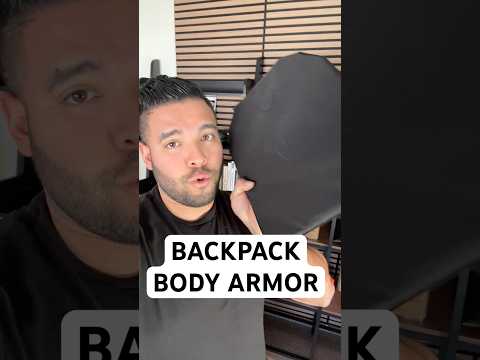
This YouTube video showcases body armor specifically designed to fit discreetly within a backpack, highlighting its potential for use in school environments. The title implies a focus on personal protection and the practical application of ballistic gear for everyday carry, particularly for students. The content likely demonstrates the product's size, weight, and concealability, emphasizing its ability to be transported easily without drawing attention. The video's aim is to inform viewers about available options for enhanced safety in potentially vulnerable situations.
This video discusses the tactical application and optimal scenarios for utilizing a "back panel," a component often associated with plate carriers or tactical vests. While not demonstrating specific firearms, the title implies a discussion relevant to firearm owners who utilize tactical gear for self-defense, range activities, or other tactical applications. The content likely focuses on the functionality and deployment of this gear in various defensive or preparedness situations.
This video demonstrates the effectiveness of homemade ballistic armor panels against .44 Magnum and 9mm Luger rounds. A panel with 70 layers successfully stopped a .44 Magnum round, while a panel with 54 layers was penetrated by both calibers. The presenter notes that more layers are likely needed to stop 9mm effectively.
This video demonstrates a ballistic panel's performance against a 9mm round. A panel with 54 layers of ballistic material was tested, but it failed to stop the 9mm projectile, showing penetration. The presenter notes that a thicker panel (70 layers total) was previously shown to stop the round, highlighting the importance of sufficient layering for effective ballistic protection.
This video demonstrates a casual test of a bulletproof hat purchased from Amazon, claimed to stop a .45 caliber round. Using a Glock 19, the hat is fired upon while placed on a mannequin head. While the hat shows some ability to catch projectiles, the analysis suggests that survival from a direct hit is unlikely due to significant impact force and potential for redirection. The experiment highlights the importance of understanding ballistic ratings and the limitations of personal protective gear.
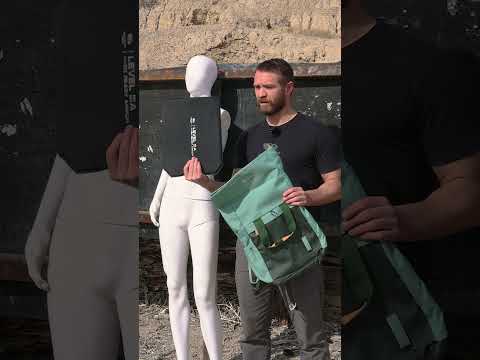
This video demonstrates how to convert a standard backpack into a bulletproof one by installing a Level IIIA armor panel. The panel is shown to be flexible, lightweight, and designed to fit into common backpack compartments like laptop sleeves. The demonstration includes placing the panel into a backpack before a simulated ballistic test.
This video explores a DIY approach to creating a Level IIIA soft armor option using a fiberglass welding blanket. The instructor demonstrates using an existing Level IIIA panel as a template for cutting the fiberglass material. The core concept is to leverage readily available hardware store materials for a potentially more accessible soft armor solution, focusing on the material's properties for impact absorption.
Gun Laws by State
Read firearms regulations for all 50 states + D.C.
Find Gun Dealers
Search licensed FFL dealers near you.