This video features Oz the Mentalist demonstrating his skills by deducing a name from Shawn Ryan's thoughts. The process involves psychological deduction, cold reading techniques, and careful observation of body language to arrive at the correct name, 'Frank'. The interaction highlights Oz's expertise in mentalism and entertainment.
This video features mentalist Oz Pearlman demonstrating his skills on Shawn Ryan, explaining the science behind mentalism. Pearlman highlights that mentalism relies on psychology, observation of body language, and learned skills rather than supernatural abilities. The content is primarily focused on entertainment and psychological demonstration, with no direct firearm training or technical instruction provided.
This video emphasizes the critical role of body language in Close Quarters Battle (CQB) operations. It highlights how non-verbal cues can effectively communicate intentions and movements to teammates, fostering seamless coordination and precision. The core message is about achieving a flow state where actions are anticipated, enabling silent and efficient teamwork. The video promotes a professional approach to these tactical situations, encouraging viewers to 'Be A Pro.'
This video, titled "WORKING TOWARDS THE THRESHOLD," focuses on the importance of reading and reacting to teammates' body language and non-verbal cues in dynamic situations. The description emphasizes the give-and-take of information processing, the need for optimal positioning, and studying reactions to stimuli. It highlights that team movement and adaptation are key, without a single secret formula. A full breakdown is mentioned as being available on their Patreon channel.
This video focuses on the critical importance of non-verbal communication and situational awareness in Close Quarters Battle (CQB). It highlights how subtle body language, such as barrel attitude, head position, and body angle, can effectively convey intentions in low-visibility, low-communication environments. The description emphasizes that developing this level of team cohesion and understanding through extensive time spent together is akin to a "superpower," transcending typical training scenarios and requiring constant attention to detail. The core message is that building trust and intimate connection within a team is paramount for success in high-stakes operations.
This YouTube Short uses the title "How to CATCH ANYONE LYING" and includes hashtags related to military, training, and life hacks. While the title and hashtags hint at a practical skill, the content itself is not about firearms, ammunition, manufacturers, or specific firearm-related applications. The focus appears to be on general life hacks and observation skills, rather than any demonstration or discussion of firearms.
This video from Active Self Protection, featuring John Correia, analyzes a citizen's intervention in a bicycle theft. Correia, an evidence-based defensive trainer, breaks down the event, emphasizing the risks of confronting property crime and suggesting appropriate intermediate force options like OC spray. The analysis highlights the importance of recognizing aggressive body language and understanding legal considerations when intervening.
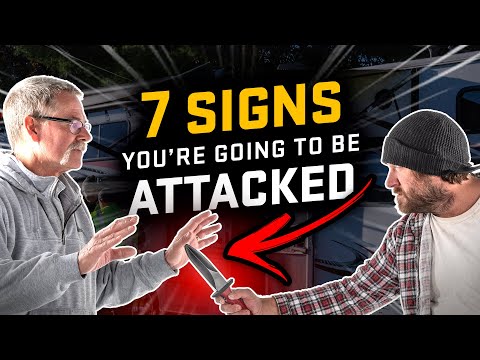
This guide, presented by Kevin Michalowski, Director of Content for USCCA, outlines seven key indicators that may signal an impending physical attack. It emphasizes the importance of situational awareness, body posture, eye contact, hand visibility, and trusting your intuition to avoid or prepare for threats. The information draws on tactical training and psychological insights.
This guide outlines three proven self-defense tactics for gun owners to avoid conflict, as presented by Mike Willand from USCCA. The core principle is that avoiding a fight is the ultimate self-defense strategy. Key tactics include de-escalation, creating space and escaping, and projecting confidence through body language. The importance of pre-emptive situational awareness is also emphasized.
This video from TENICOR emphasizes the importance of broadening one's skill set beyond firearms for conflict resolution. It suggests that while a gun is a tool for extreme situations, other solutions like grappling, pepper spray, conversation, and body language are also vital. The core message is to train broadly and thoughtfully to be prepared for the unpredictable nature of real-world scenarios, advocating for a diverse approach to personal safety and conflict management.
This video from Tactical Hyve and CCW USA, featuring Bill and his son Brandon, outlines essential concealed carry tactics focusing on the 'Defend, Distance, and Draw' principle. It emphasizes situational awareness as the primary defense, advising individuals to be vigilant in transitional spaces and aware of potential threats. When an attack is imminent and distance cannot be immediately established, the strategy shifts to defending against the initial assault with combatives, creating damage, and then creating distance before considering a firearm draw. The importance of less-lethal options and continuous training under stress is also highlighted.
This video from Active Self Protection, featuring John Correia, breaks down critical self-defense lessons from a three-on-one fight. It emphasizes the importance of verbal de-escalation, managing unknown contacts, and protecting against sucker punches. Correia, an established expert, analyzes body language and pre-attack indicators, offering practical techniques like the 'defensive fence' and 'vertical shield' for unarmed defense.
Gun Laws by State
Read firearms regulations for all 50 states + D.C.
Find Gun Dealers
Search licensed FFL dealers near you.